
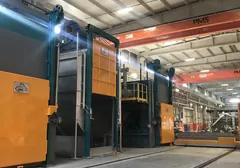

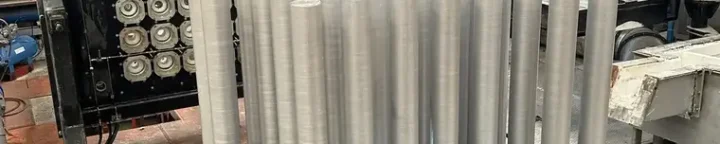
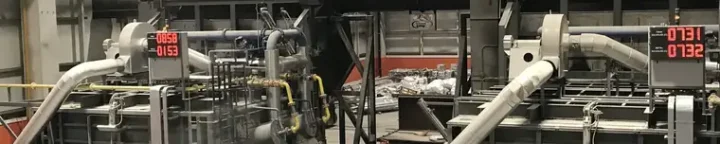


We build vacuum pressure impregnation (VPI) plants on a turnkey basis
We deliver the VPI plant, which fills the air voids in electric motor, generator and transformer windings with resin, in three main groups: the main autoclave, the resin storage and conditioning unit, and the vacuum-pressure system. All three are managed from a single PLC; the parameters of every cycle are recorded.
- Inner diameter
- Ø 3,000 mm
- Load capacity
- 6 tonnes
- Pressure
- 10 bar
- Vacuum
- 0.7 mbar
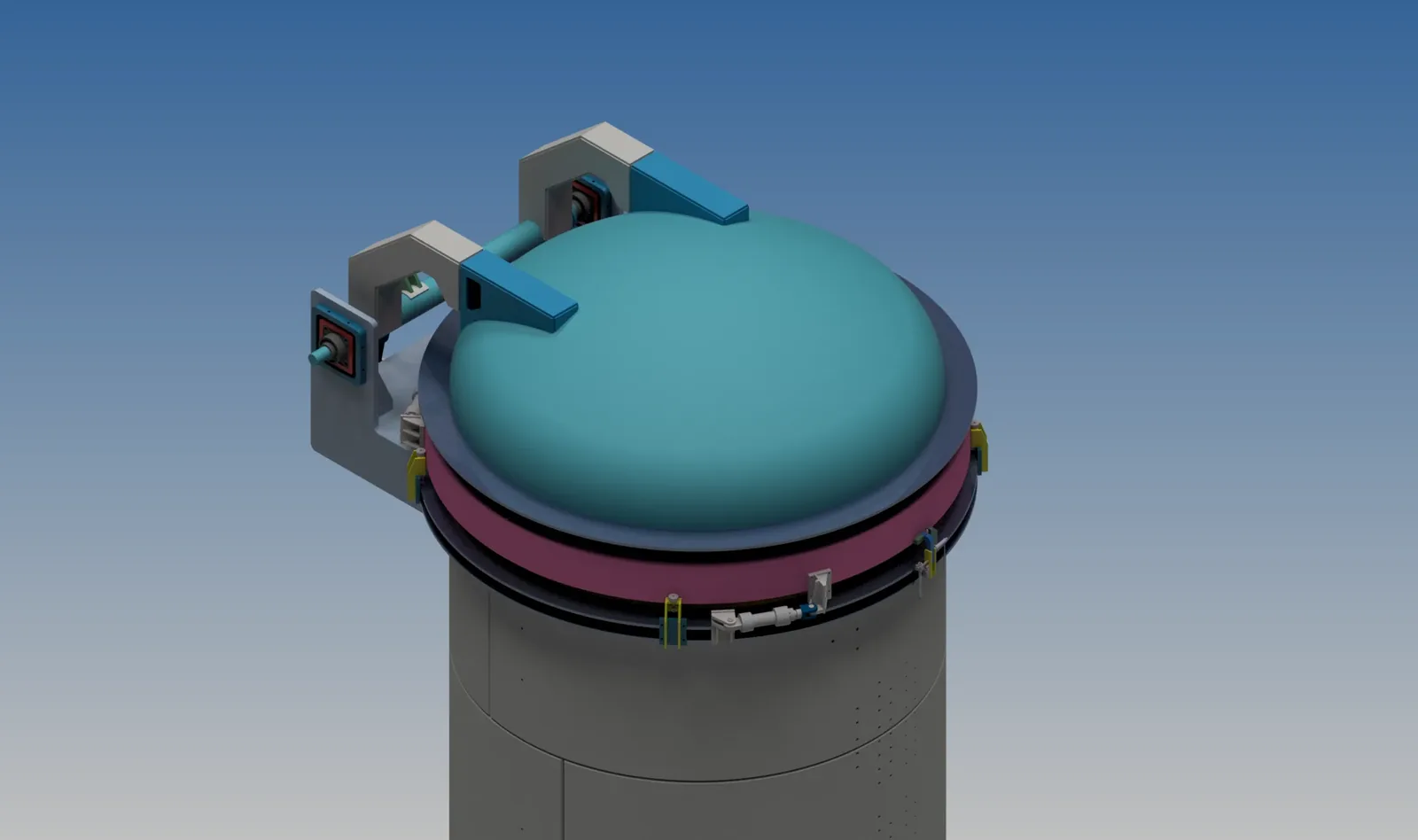
VPI impregnation plant technical specifications
- Autoclave inner diameter
- Ø 3,000 mm — reference project size
- Autoclave length
- 3,600 mm
- Maximum part load
- 6 tonnes
- Daily capacity
- 4 traction motors
- Operating pressure
- 10 bar (nitrogen or compressor)
- Vacuum level
- 0.7 mbar (staged pumping)
- Process temperature
- 60 – 80 °C
- Curing temperature
- 165 °C
- Tank material
- AISI 304L stainless steel, 20 mm wall thickness
- Heating
- Half-pipe coil jacket on the outer surface
- Observation
- 2 pressure-resistant sight glasses
- Resin storage
- 5-tonne capacity, double-walled, insulated tank
- Resin storage temperature
- 35 – 40 °C — to preserve its usable life
- Compatible resin
- Class C silicone varnish
- Control
- PLC + HMI; recipe recording and cycle report
- Safety
- Safety valve, automatic pressure relief, emergency stop
- Certification
- Pressure vessel CE certificate, NDT-approved welds
Why vacuum and pressure together?
With immersion alone, the resin coats the outside of the winding but cannot displace the air inside. With vacuum alone, the air comes out, but the resin does not drop to the bottom of the void by itself. When the two are applied in sequence, the volume emptied of air is forced full of resin by pressure. The result: an insulation structure with no air left in it and a markedly lower risk of partial discharge.
Impregnation is completed in six steps, from loading to curing
Loading
Motors or wound equipment are placed in the autoclave and the lid is sealed shut.
Deep vacuum
The vacuum pump lowers the pressure to 0.7 mbar; air and moisture inside the winding are evacuated. Duration is 30–60 minutes.
Resin filling
Heated varnish at 60–80 °C and low viscosity is admitted into the autoclave and penetrates the winding under vacuum.
Pressure
With 10 bar of nitrogen or compressor pressure, the resin is driven into the smallest capillary voids.
Draining
Excess resin is returned to the storage tank, pressure is released in a controlled way, and the parts are removed.
Curing
Cross-linking is completed in the oven at 165 °C; the winding becomes hard, void-free and sealed.
Four things set this plant apart
No voids are left in the insulation
0.7 mbar vacuum draws out the air, and 10 bar pressure drives the resin into the capillary voids. No air is left inside the winding.
Large parts fit
Ø3,000 mm inner diameter and 6 tonnes loading capacity. Large traction motors can be processed in one go.
Every cycle is recorded
Pressure, temperature and vacuum curves are recorded in every cycle. The same recipe is repeated in the same way every time.
CE-certified pressure vessel
AISI 304L body, NDT-approved welds and a design that complies with the pressure equipment regulations.
We answer frequently asked questions
about the impregnation plant
Large wound equipment, above all traction motors: generator stators, transformer windings, high-power electric motors. What matters is that the part fits in the autoclave and that its weight does not exceed the capacity.
Four per day for parts the size of a traction motor. With small parts the number is higher, because more than one part can be loaded into a single cycle.
We design the plant to work with class C silicone varnishes; resin supply is usually the responsibility of the customer’s plant. We determine together at the project stage which product you will use, because the storage temperature and viscosity settings are made accordingly.
Yes. Ø3,000 mm and 3,600 mm are reference project dimensions; the autoclave is sized to the largest part to be processed. Pressure and vacuum values stay the same.
Which related topics go with this plant?
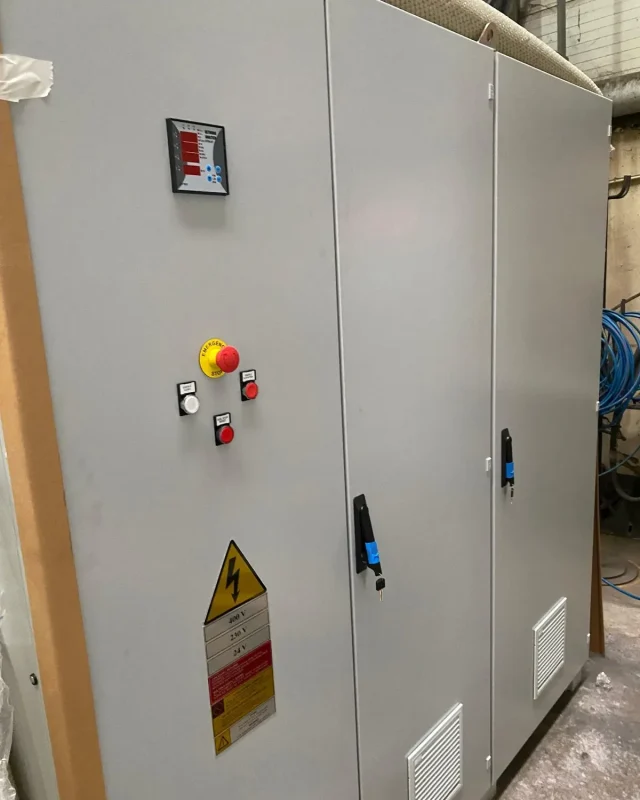
PLC & SCADA Systems
The control side that manages and records the vacuum, pressure and temperature curves.
DISCOVER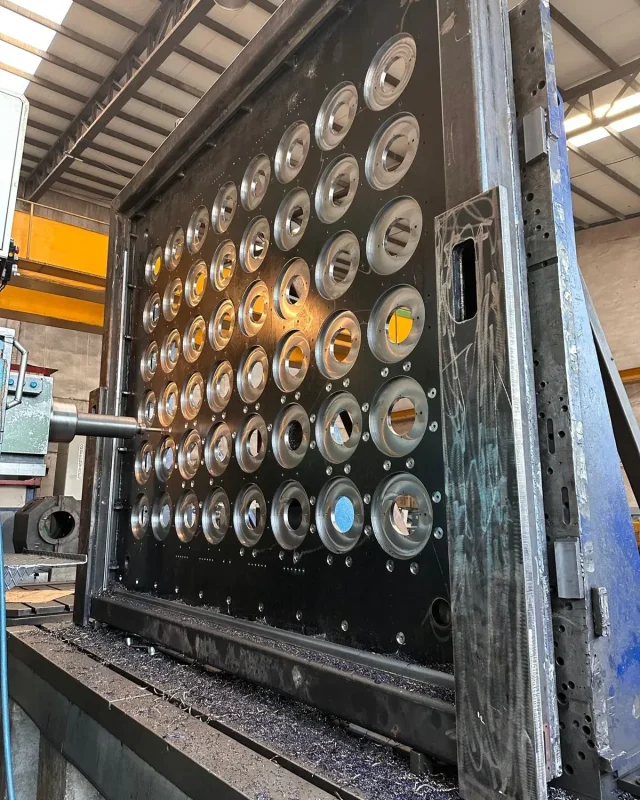
Machine & Parts Manufacturing
The workshop that manufactures the autoclave body and mechanical parts: 5-axis CNC and lathe.
DISCOVER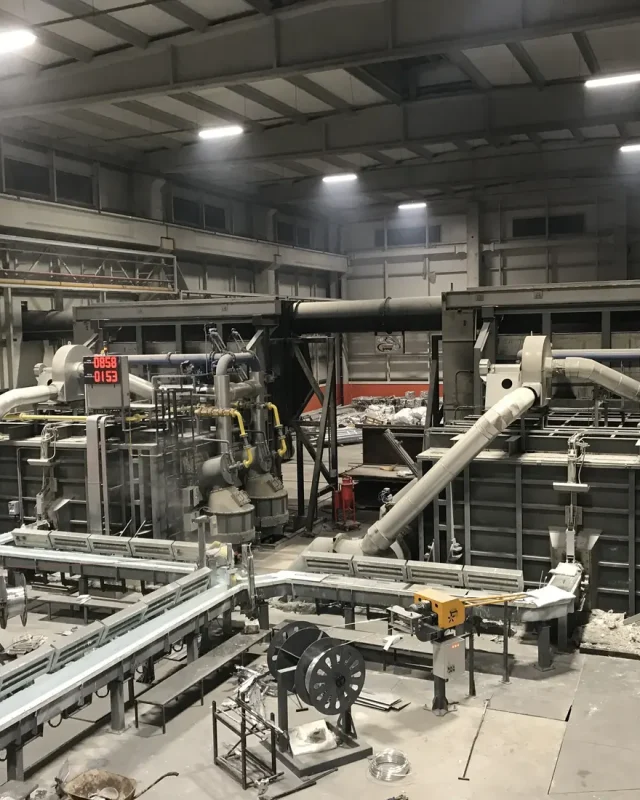
R&D and Engineering
The design side of non-standard equipment: calculation, drawing and prototype.
DISCOVER
Service and Maintenance
Post-commissioning maintenance, spare parts and fault response.
DISCOVERShare the size of your largest winding
Which equipment will you impregnate, how heavy and large is the largest piece, and how many do you want to process per day? The autoclave size follows from these three pieces of information.
Request a Quote