
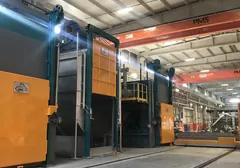


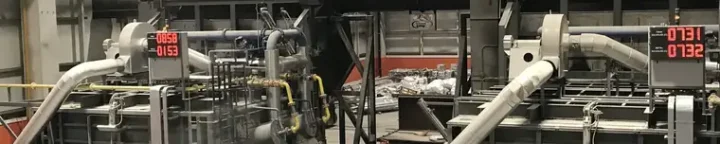


We control atmosphere and ramps precisely in sheet and foil annealing furnaces
We build the annealing furnaces that bring cold-rolled aluminium to the target temper: bell-type for coils, batch-type for sheet stacks and continuous for in-line annealing. Dew point monitoring, sealing and a controlled atmosphere are part of the design, so surface quality is safeguarded as much as the mechanical properties.
- Atmosphere
- H₂ / N₂
- Temperature
- 250 – 600 °C
- Types
- Bell / batch / continuous
- Alloys
- 1xxx · 3xxx · 5xxx · 8xxx
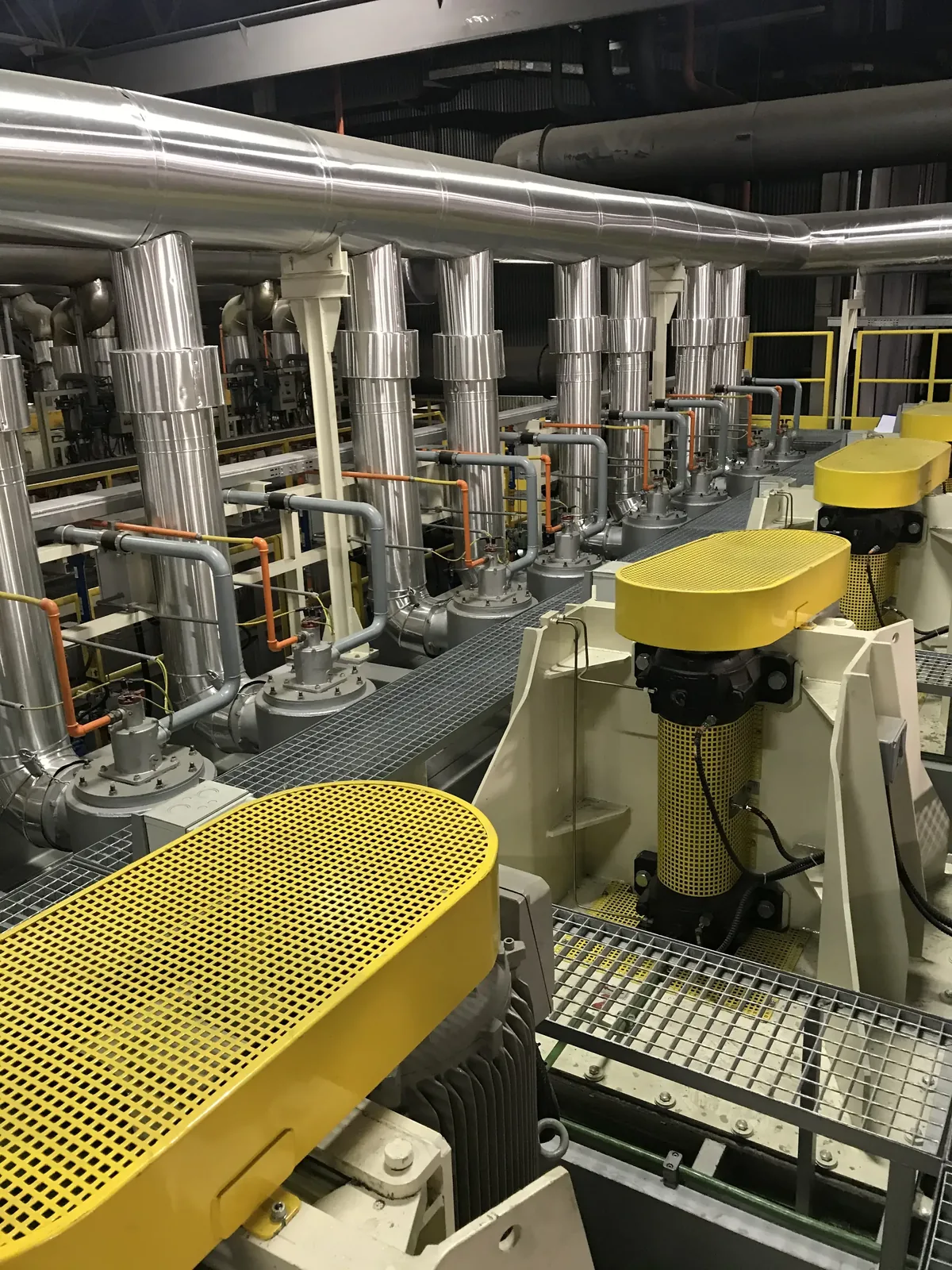
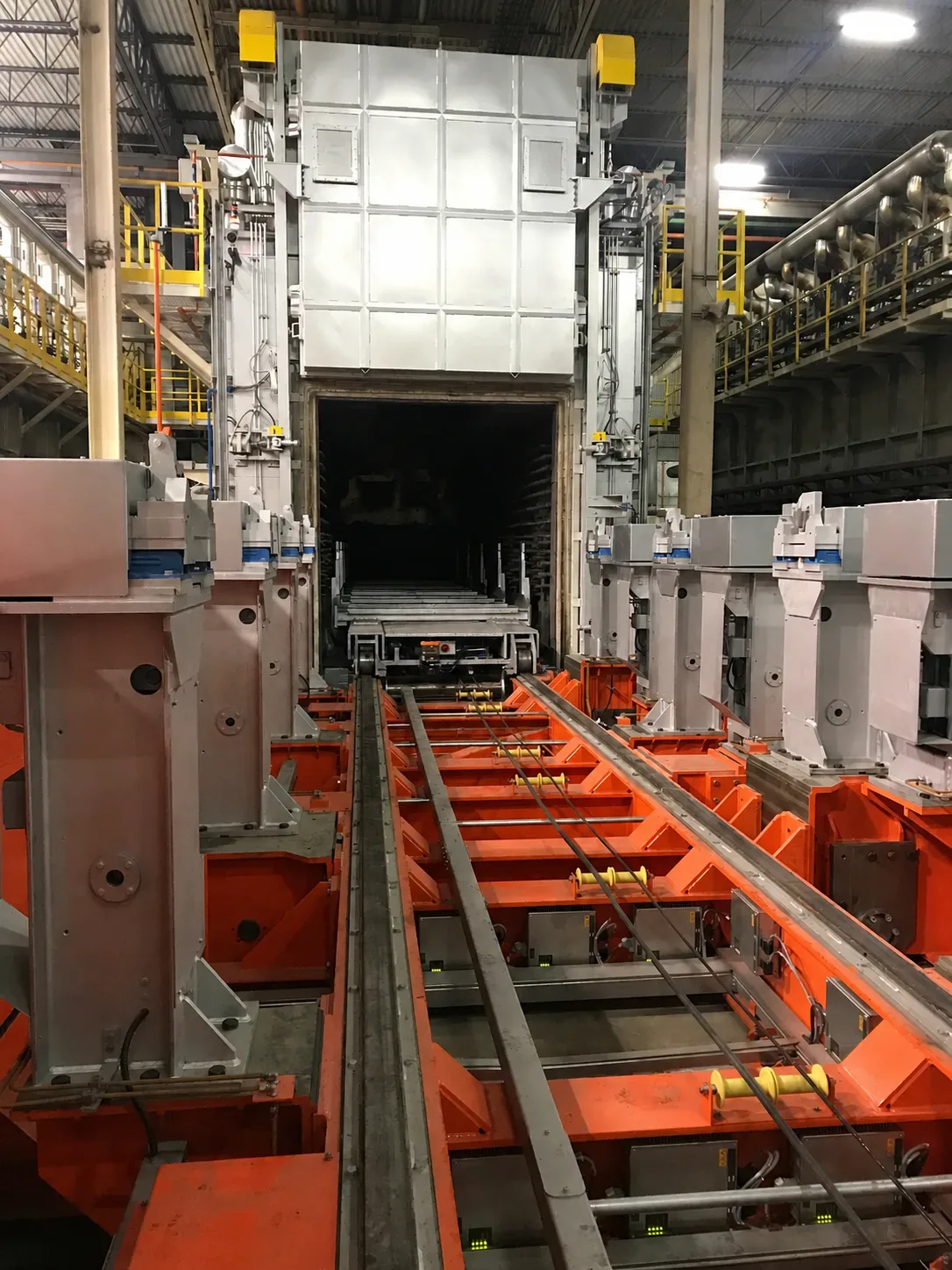
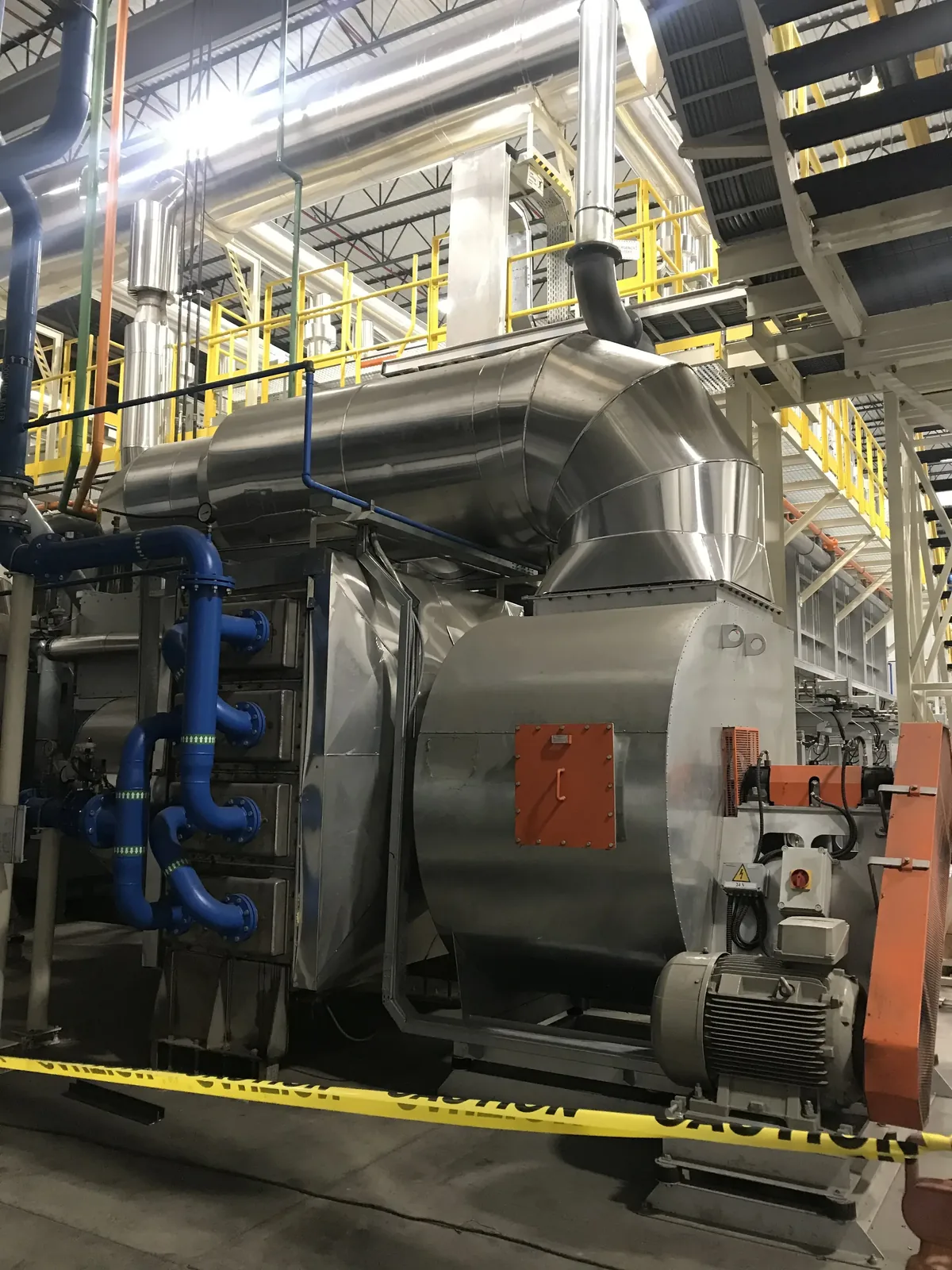
Sheet and foil annealing furnace technical specifications
- Furnace types
- Bell-type · batch sheet annealing · continuous strip annealing
- Operating temperature
- 250 – 600 °C
- Atmosphere
- H₂ · N₂ · H₂/N₂ mixture
- Atmosphere monitoring
- Dew point measurement, oxygen analysis, leak test
- Charging
- Multiple coils · sheet stacks · continuous strip
- Heating
- Gas-fired (recuperative) or electric
- Circulation
- High-flow fan — speeds up heat transfer within the coil
- Control
- PLC — recipe-based heating, soak and cooling ramps
- Records
- Batch report; curve display on SCADA
- Alloy compatibility
- 1xxx · 3xxx · 5xxx · 8xxx series
- Energy
- Recuperative burner, enhanced insulation, waste heat recovery
Why is a protective atmosphere needed?
At annealing temperature an aluminium surface oxidises quickly, and rolling oil burns on the surface and leaves stains. The result is a dull, mottled surface and defects that build up in later rolling steps. A hydrogen or nitrogen atmosphere solves both problems at once: oxygen is removed from the environment, and the oil vaporises cleanly and is exhausted. In foil and high-grade sheet production, atmosphere control is a necessity rather than a choice; in general annealing applications it makes a directly visible difference in quality.
We select the furnace type according to your product mix
Bell-Type Coil Annealing Furnace
Multi-coil charge, closed bell and protective atmosphere. The number of bases and the bell size are determined by the coil diameter and the target tonnage.
Batch-Type Sheet Annealing Furnace
Rack loading arrangement for sheet stacks. The spacing between stacks is set to suit the air circulation.
Continuous Strip Annealing Furnace
An in-line solution integrated with winding, unwinding and tension control. It pays for itself at high, steady tonnage.
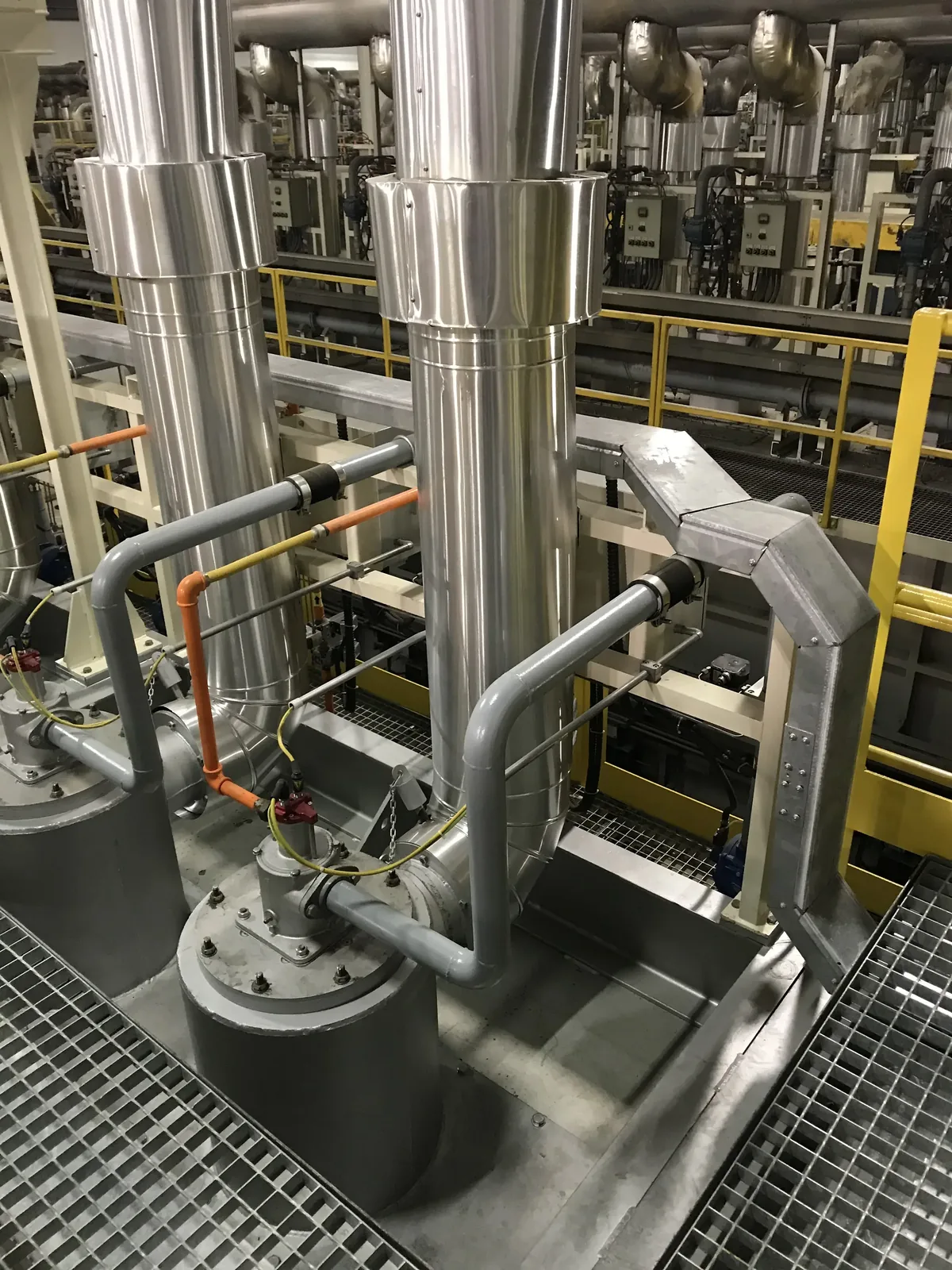
Atmosphere Generation and Distribution Unit
Generator, distribution line, analysis and leak monitoring. Dew point and oxygen are measured continuously.
Energy Recovery Package
Recuperative burner and waste heat utilisation. Fuel per tonne falls while the cycle time also shortens.
Four things set this furnace apart
The surface stays bright
An H₂ or N₂ atmosphere prevents oxidation, and rolling oil is removed without leaving marks. This is decisive in foil and high-grade sheet.
Ramps are called up from the recipe
Heating, soak and cooling curves are stored per alloy. Switching between 1xxx and 5xxx does not mean the settings have to be found again.
We build all three furnace types
Bell-type for coils, batch-type for sheet stacks, continuous for in-line work. You choose the one that suits your product mix and are not forced into a single type.
Fuel per tonne goes down
A recuperative burner, thick insulation and optimised air circulation work together; the cycle time also shortens.
Explore the technical documents and catalogues
We answer frequently asked questions
about annealing furnaces
Nitrogen is easier and safer, and is sufficient for most general annealing applications. Because hydrogen increases heat conduction, it shortens the cycle time inside a coil and leaves the surface brighter; it is preferred for foil and high-grade sheet. Using a mixture is also common.
It depends on the coil diameter, width and bell size; multi-coil stacking is standard. If you share your coil dimensions and target tonnage, we work out the bell size and the number of bases together.
Yes, if the body and sealing are suitable. Typically the atmosphere line, analysis equipment and control side are renewed, and the furnace itself stays. We provide the scope in writing after a site survey.
At high, steady tonnage. If the product mix is wide and the batches are small, a bell-type or batch-type solution stays more flexible. We make the decision together with you, based on your annual tonnage and product mix.
Which production is this furnace part of, and what runs alongside it?
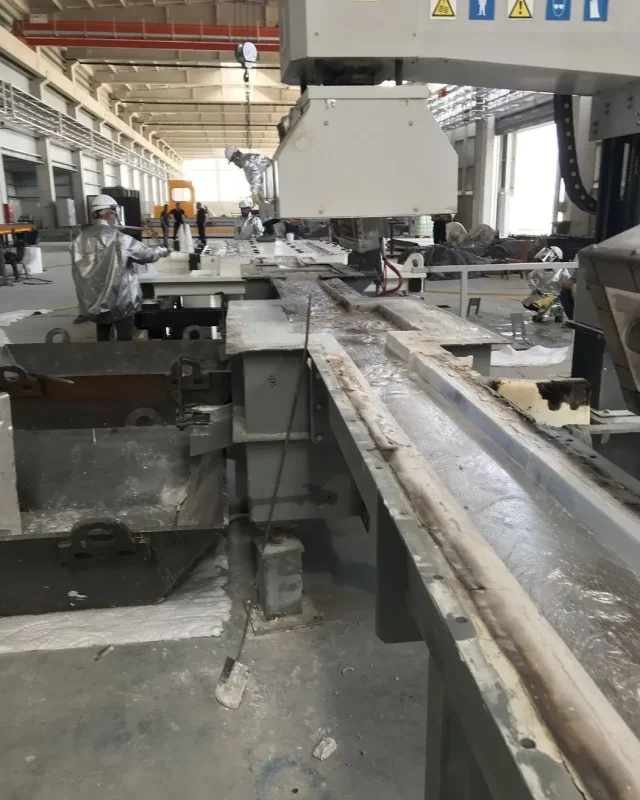
Flat-Rolled Production
Which equipment makes up the whole line in plants producing sheet, foil and coil?
DISCOVER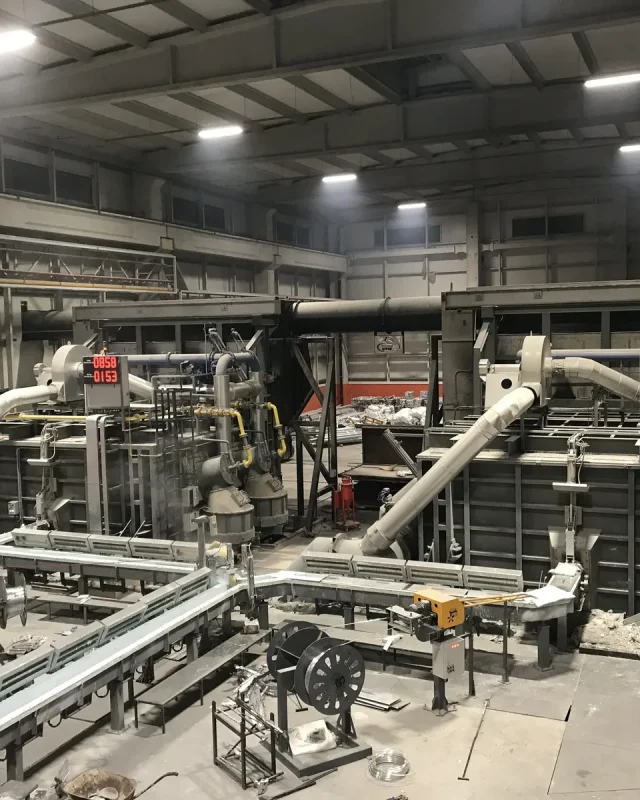
Melting & Holding Furnaces
The start of the sheet line: the furnace that melts scrap and holds it at casting temperature.
DISCOVER
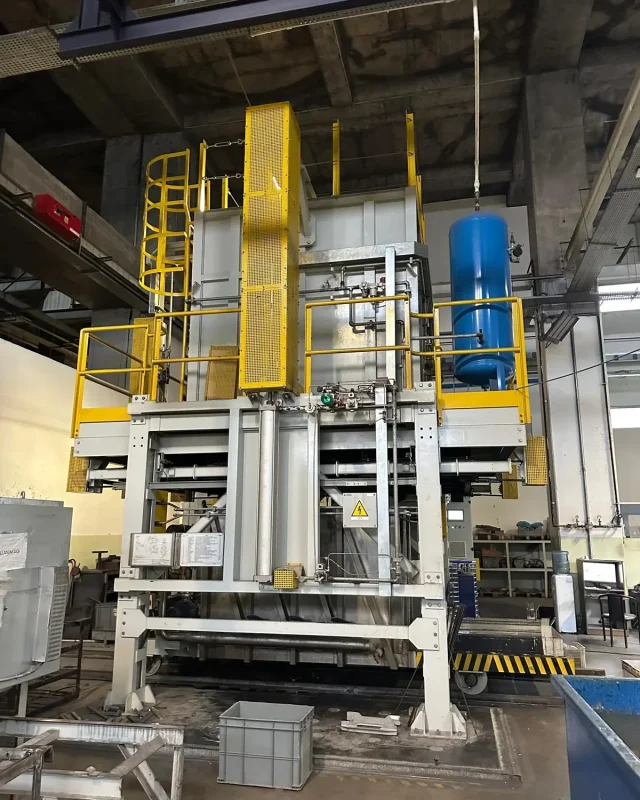
Heat Treatment Systems
Heat treatments other than annealing: homogenisation, solution treatment, ageing.
DISCOVERShare your coil dimensions
Your coil diameter, width and annual tonnage: these three determine the bell size, the number of bases and the atmosphere type. Tell us about your product mix and we will size the furnace accordingly.
Request a Quote