
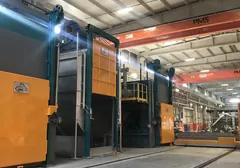
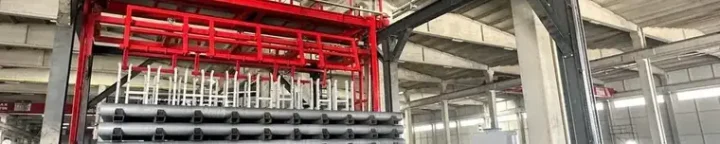
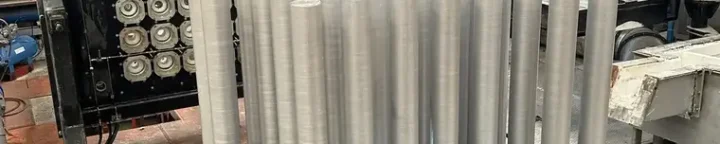
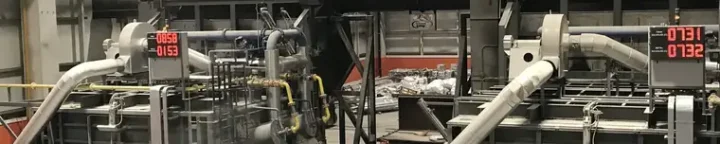
We deliver the billet casting line from the pit to stacking under single-source responsibility
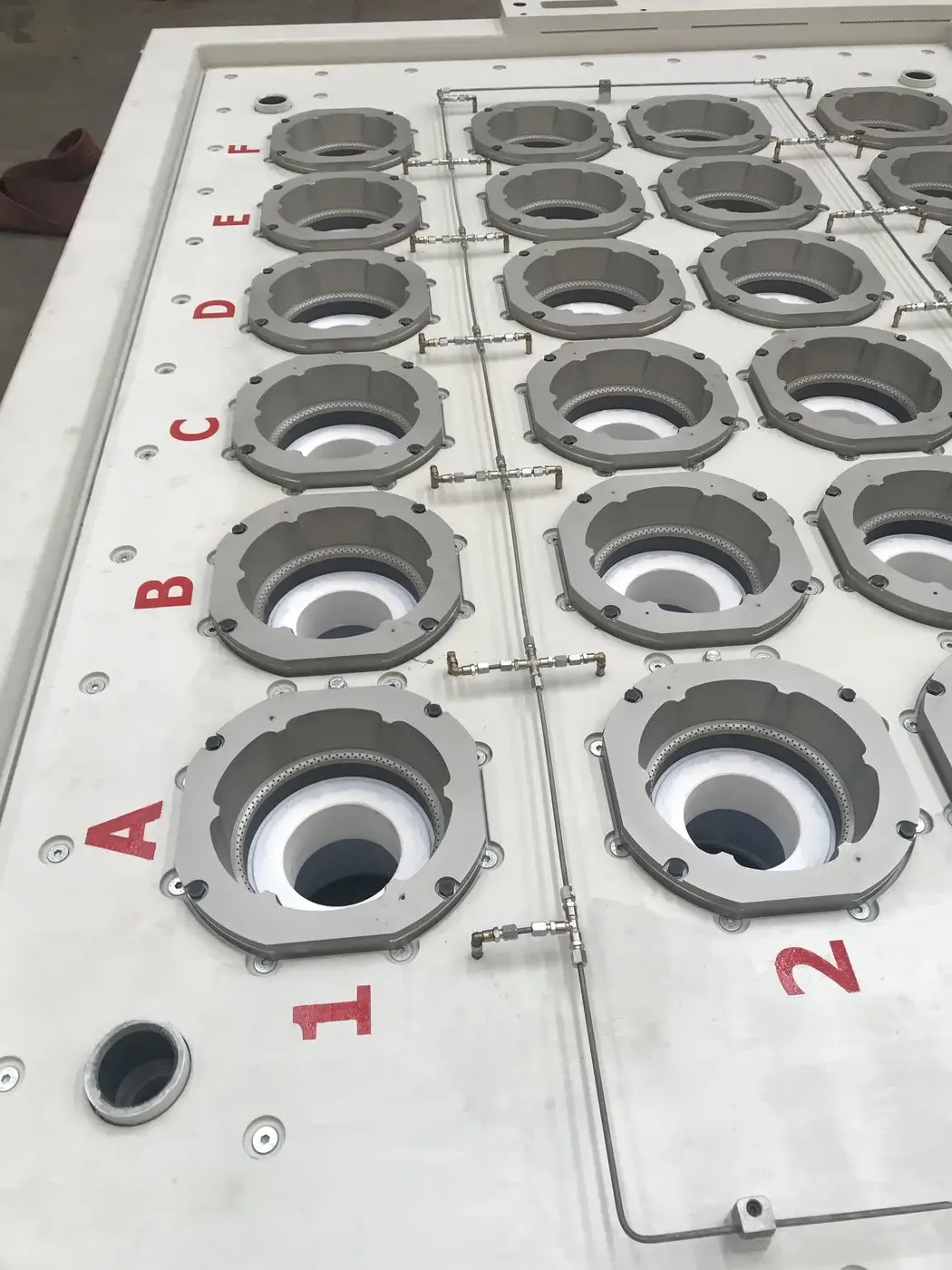
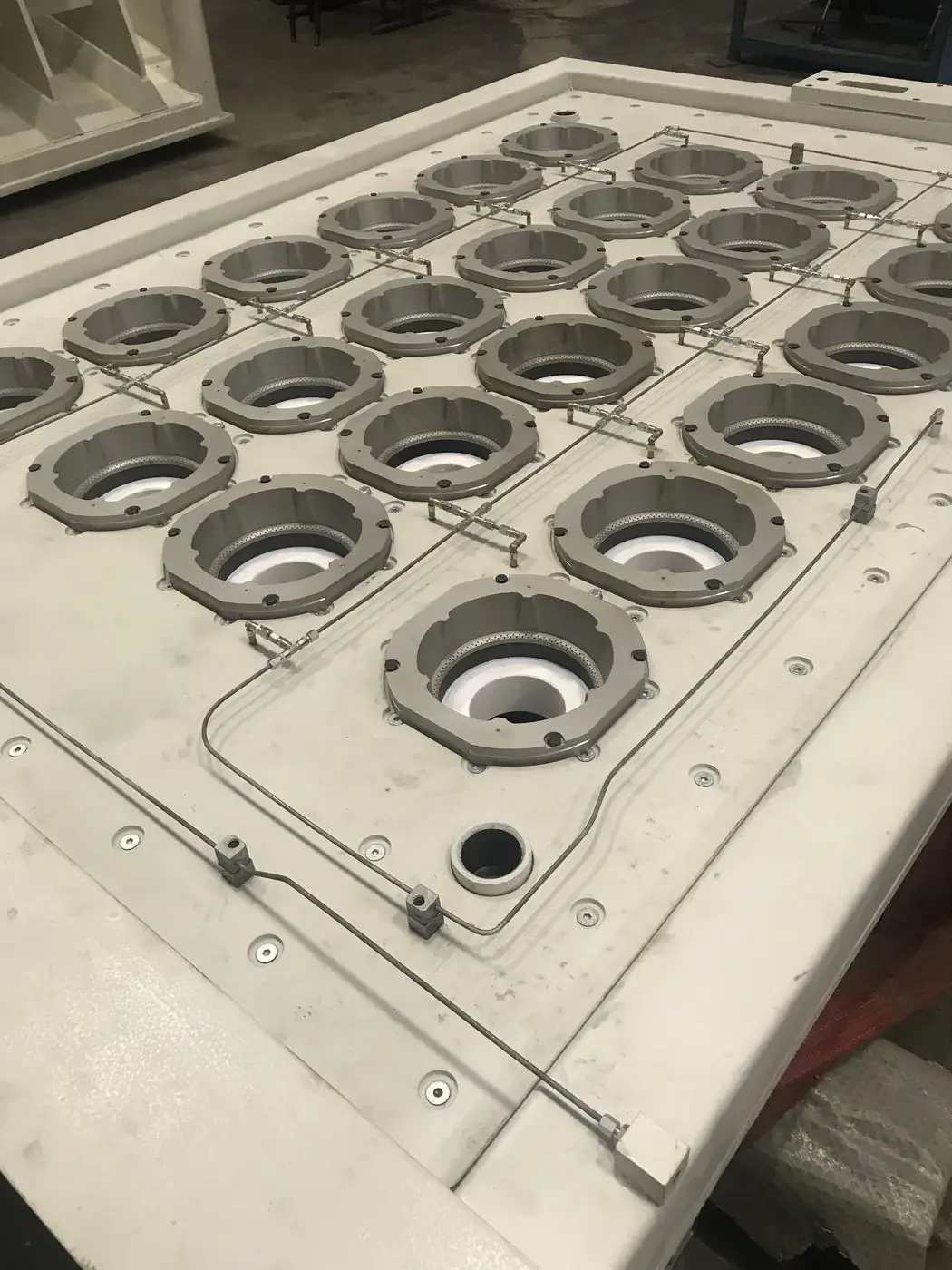
With Air-Casting mould technology we improve surface quality and reduce the machining allowance. The pit, mould table, water system and automation come in a single project, and we machine moulds in the 75–300 mm range in our own workshop in Çayırova.
- Billet diameter
- 75 – 300 mm
- Casting method
- Vertical DC (VDC)
- Mould
- Air-Casting
- Alloy compatibility
- 1xxx – 7xxx
Why the Gumen Makina VDC System?
Mould manufacturing included
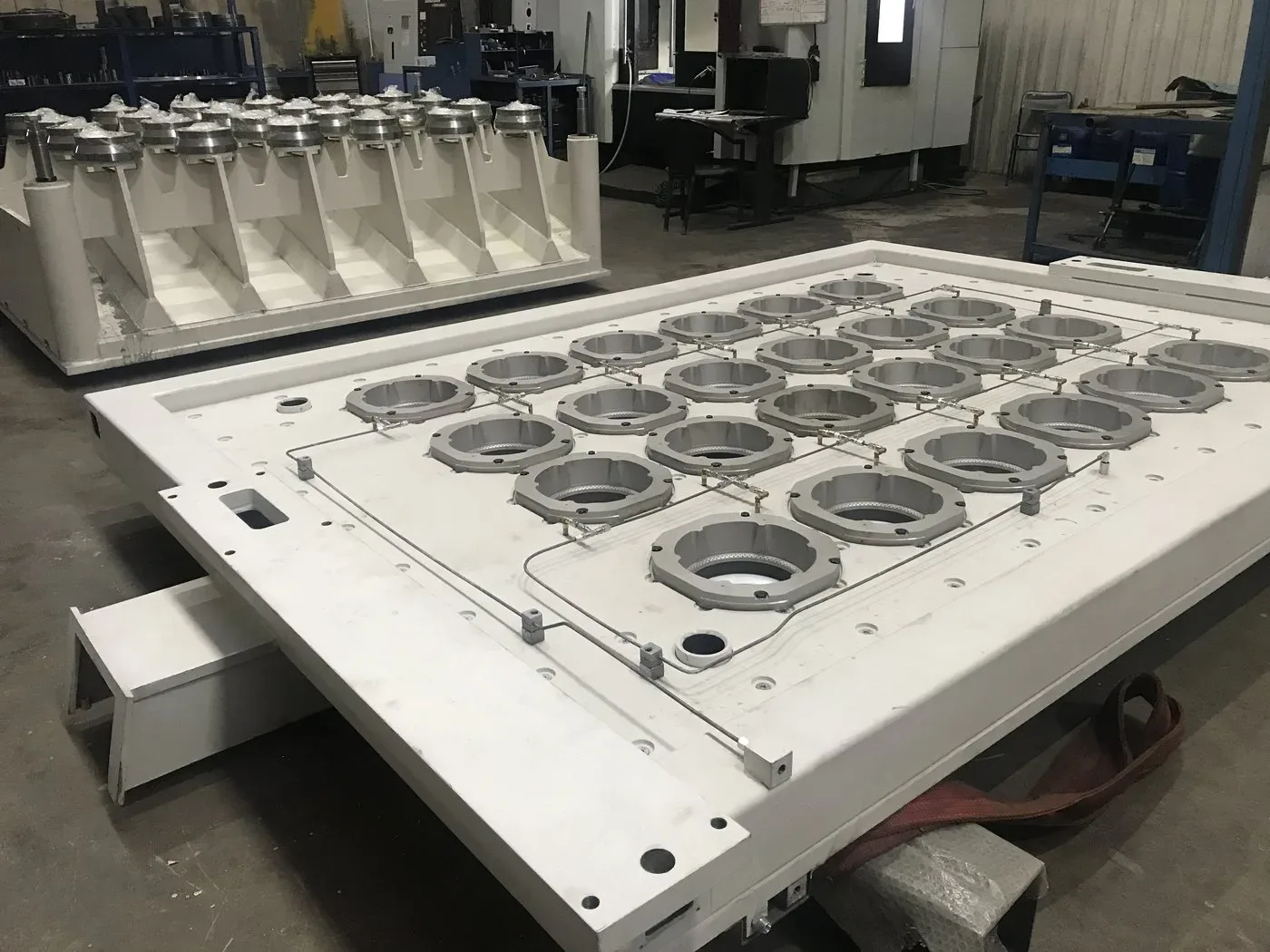
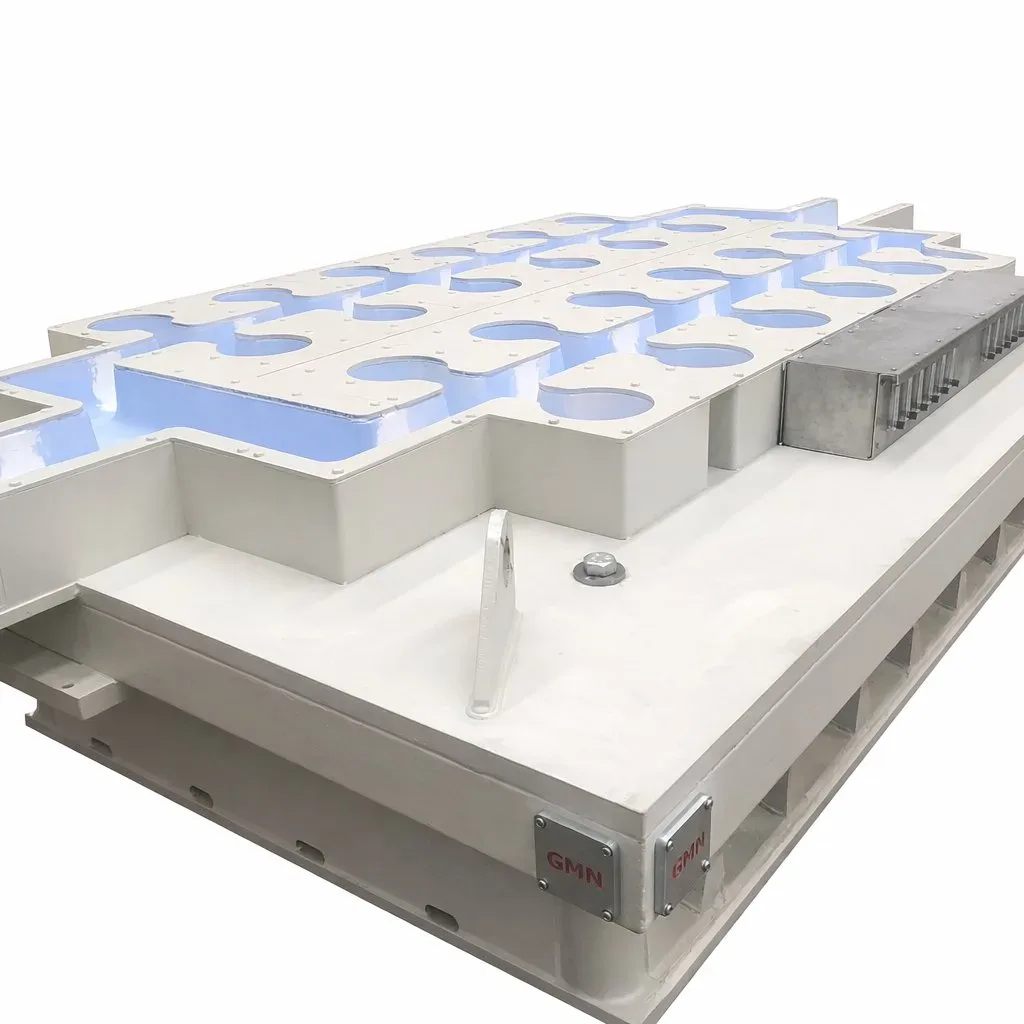
Moulds and water distribution heads specific to the billet diameter are machined in our own workshop. When you want to change diameter, there is no wait for an imported mould, and the spare mould comes from the same place.
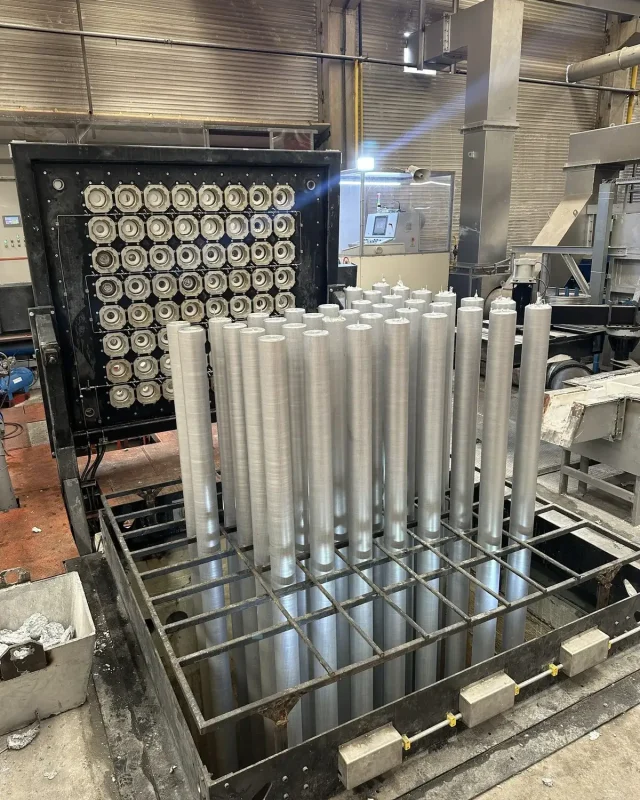
Air-Casting mould
The air curtain applied beneath the mould delays direct contact of the cooling water with the metal surface. The risk of surface cracks and cold shuts falls, and turning scrap loss is reduced.
UT testing integration
An ultrasonic testing station can be added to the line. The billet is scanned immediately after cutting, and internal defects are reported within the line without going to a separate plant.
Design and manufacturing in one place
Engineering and manufacturing, from the mould to automation, under one roof. There is no wait for import lead times for mould changes, spare parts or commissioning.
From the mould to the water system, in a single project
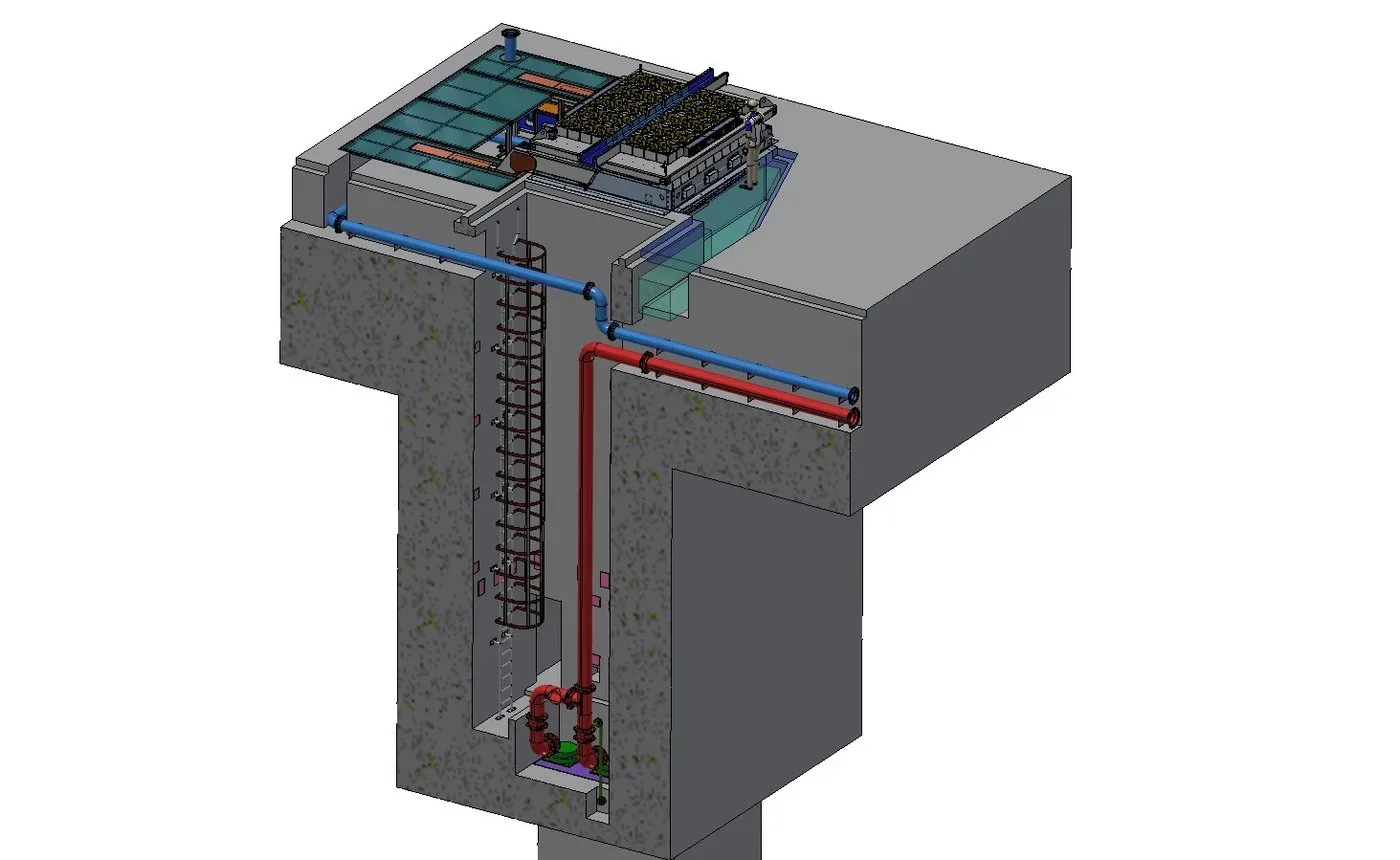
Casting Pit and Platform
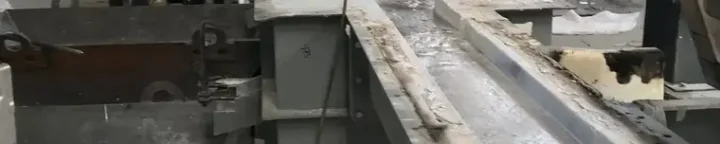
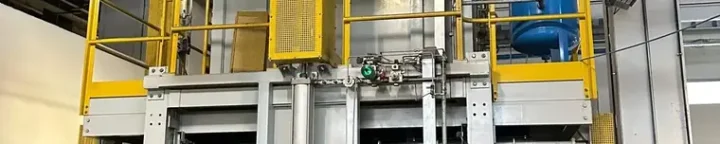
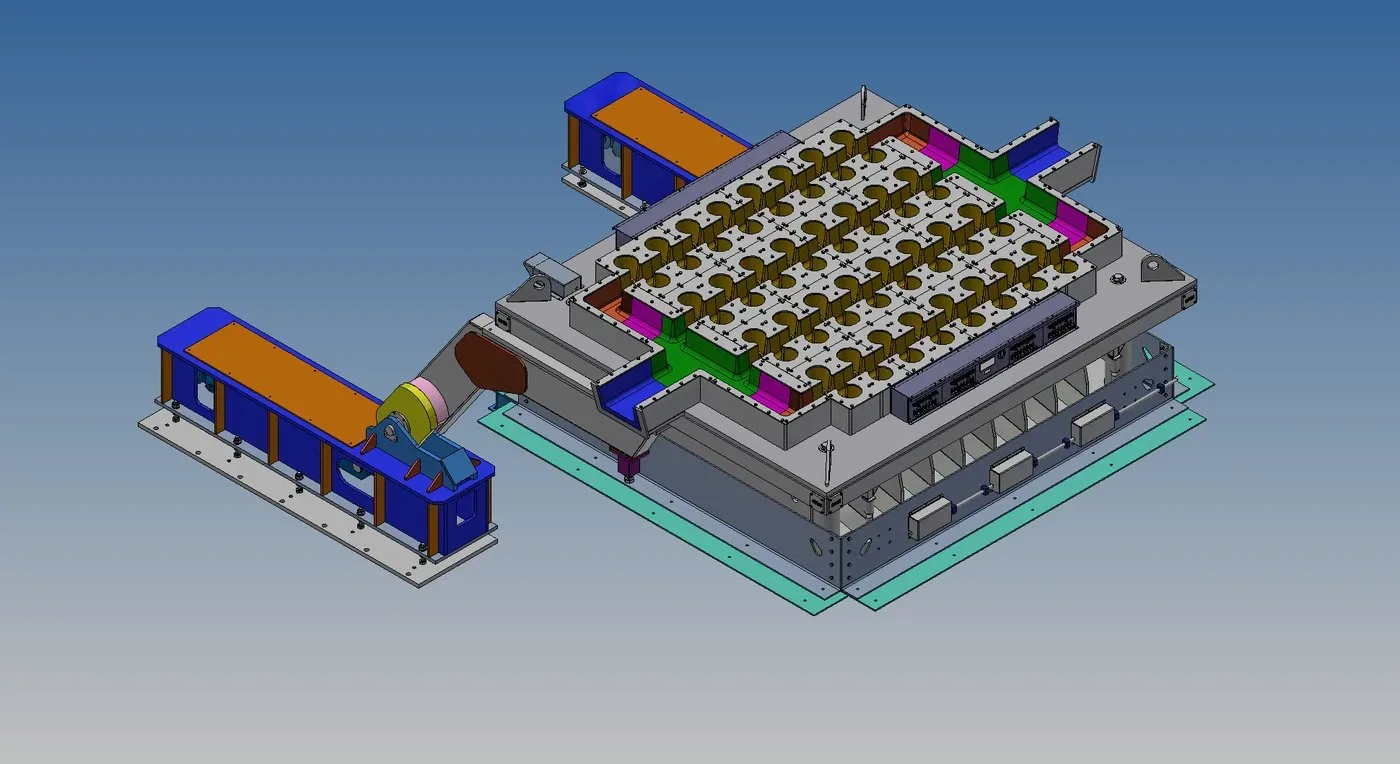
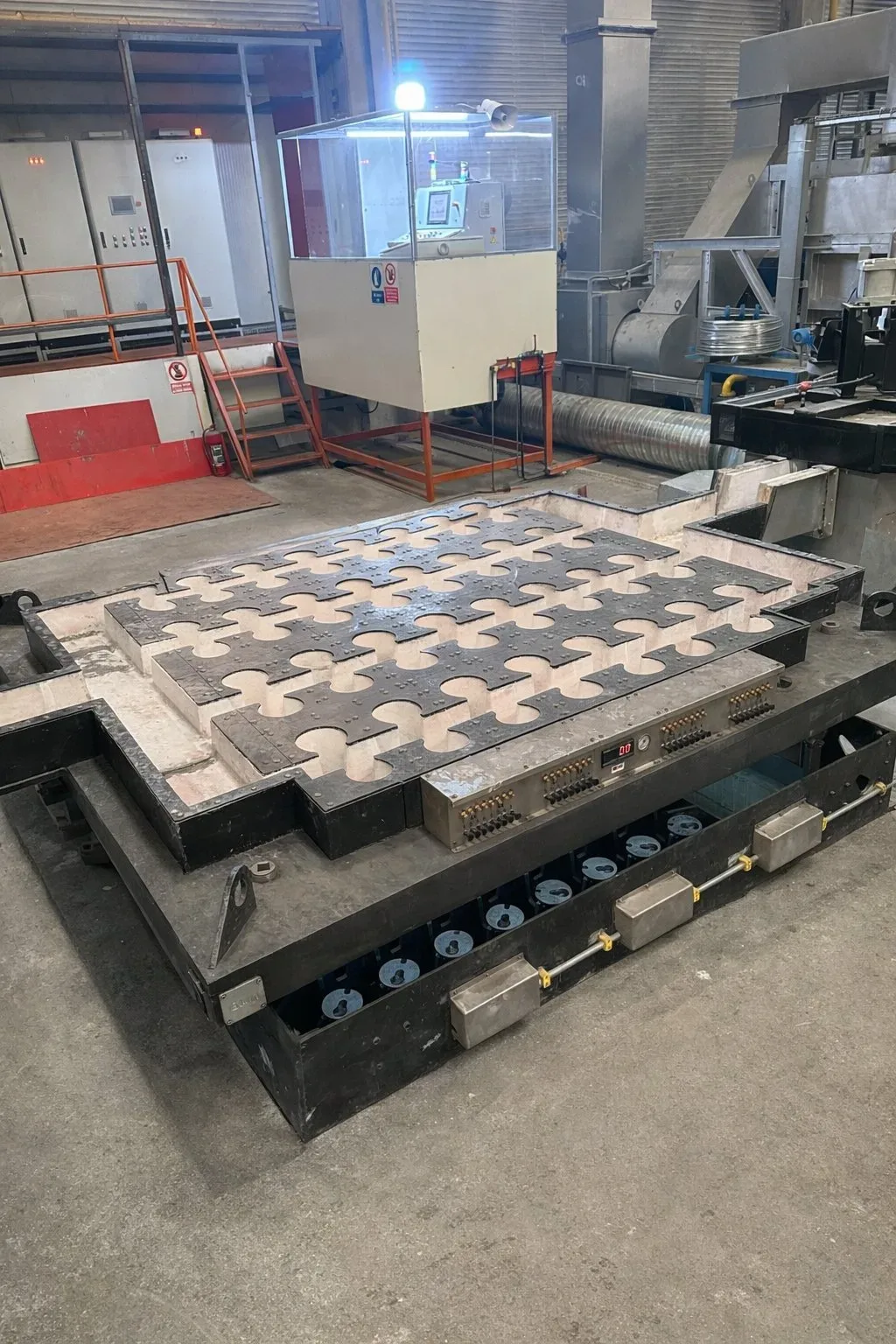
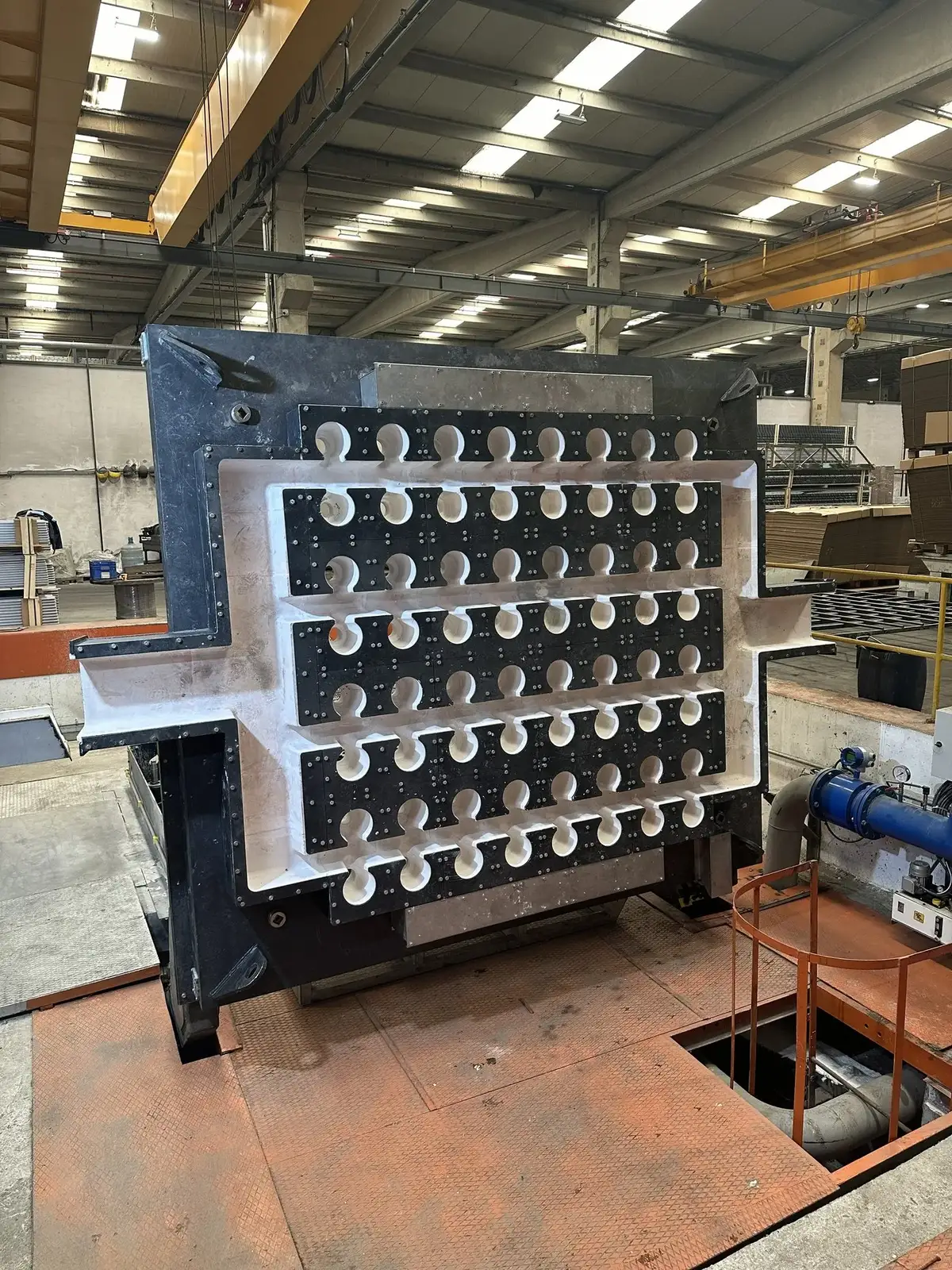
System structure: pit body, hydraulic cylinder and guideway, bottom table, working platform and safety equipment. This section determines billet length and casting speed: pit depth is set by the longest billet you want to produce.
- Pit depth to suit billet length
- Hydraulic lowering speed control
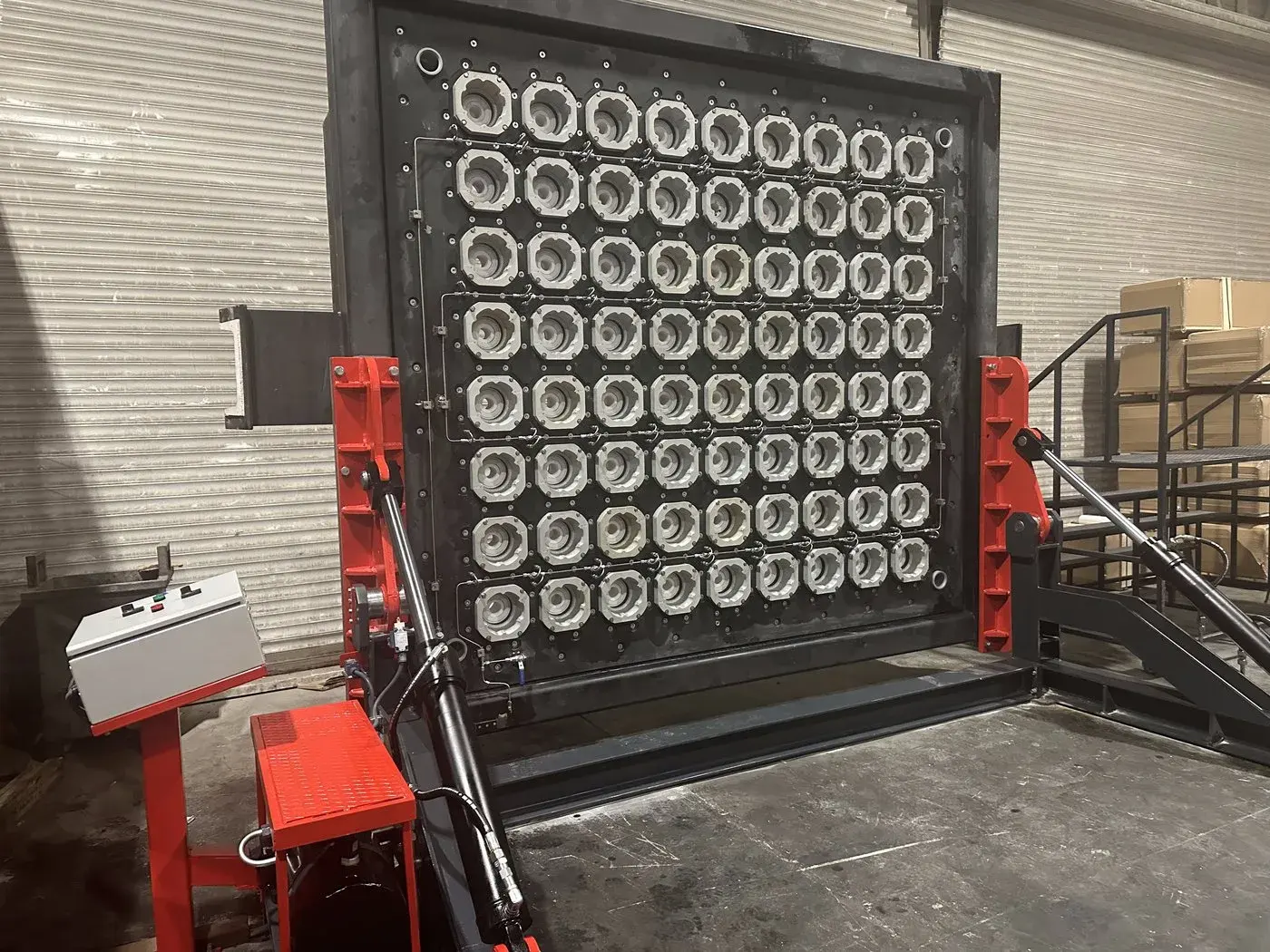
- Table suited to multi-mould layouts
- Working platform and safety equipment
- Site-specific reinforced concrete detail design
- Special cross-section for slab casting
Air-Casting Mould and Water Distribution System
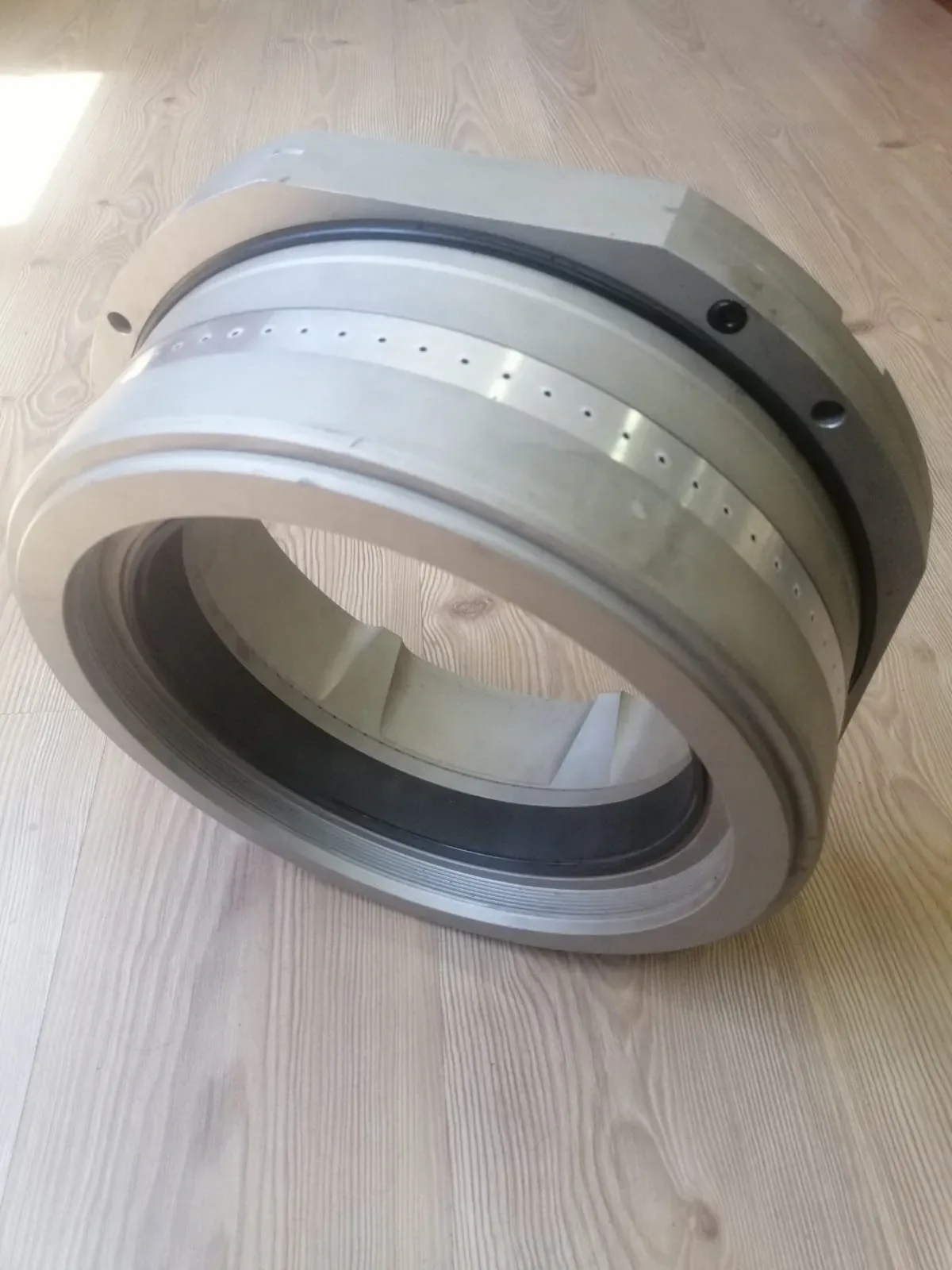
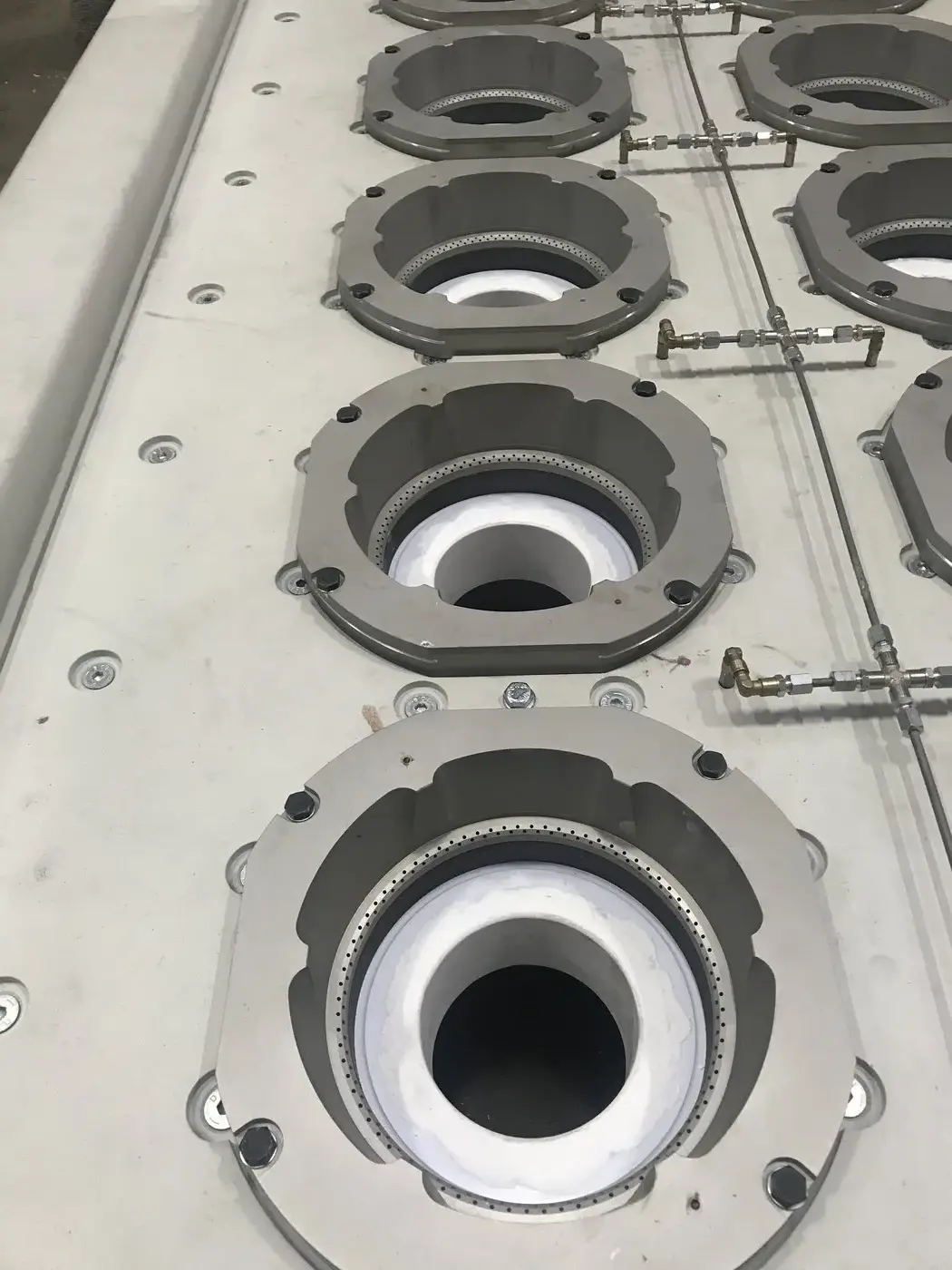
System structure: mould body, air curtain channels, water distribution head and seal set. This is where surface quality is decided; the moulds are manufactured by Gumen.
- Billet diameter of 75 – 300 mm
- Air-Casting mould with air curtain
- Diameter-specific water distribution head
- Mould manufacturing in our own workshop
- Control of surface cracks and cold shuts
- Reduced machining allowance
Automation and Closed-Loop Cooling
System structure: PLC panel, casting speed and water flow rate control, temperature measuring points, pump set and closed-loop water line. The casting recipe is stored here: when the same alloy is cast a second time, the same curve runs.
- PLC-controlled casting speed
- Automatic adjustment of cooling water flow rate
- Casting recipe records by alloy
- Closed-loop water recovery
- Shared infrastructure with melting and degassing
- Optional ultrasonic testing integration
Technical documents and catalogues
We answer frequently asked questions
about billet casting
When the water touches the metal. In conventional DC casting, the cooling water strikes the surface leaving the mould directly; in Air-Casting, the air curtain below the mould delays this contact throughout solidification. The result shows on the surface: fewer cracks and cold shuts, and a smaller machining allowance for turning.
Yes. Moulds and water distribution heads specific to the billet diameter are machined in our workshop in Çayırova. When you move to a new diameter or renew a mould, you do not wait for import lead times.
We work in the 75–300 mm range. Casting more than one diameter in the same pit is possible; what decides it is the layout of the mould table and the water distribution. If we know from the start which diameters you cast and how often, we build the table accordingly.
No, it is optional. For work that requires certification, such as aerospace, defence or automotive supply, in-line testing makes a clear difference; for standard extrusion billet it can also be added later. Leaving space for it in the pit design now makes things easier later on.
The depth is determined by the longest billet you will cast, and the area by the mould table and platform. We provide the reinforced concrete detail as a design after the site has been measured; groundwater and the condition of the existing foundation become clear at this stage.
We manufacture the equipment that makes up this solution in our own plant
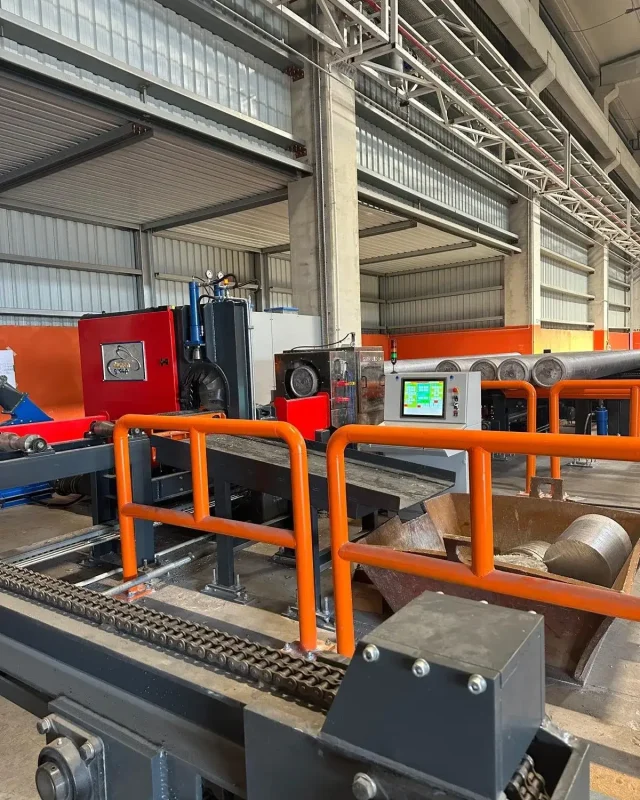
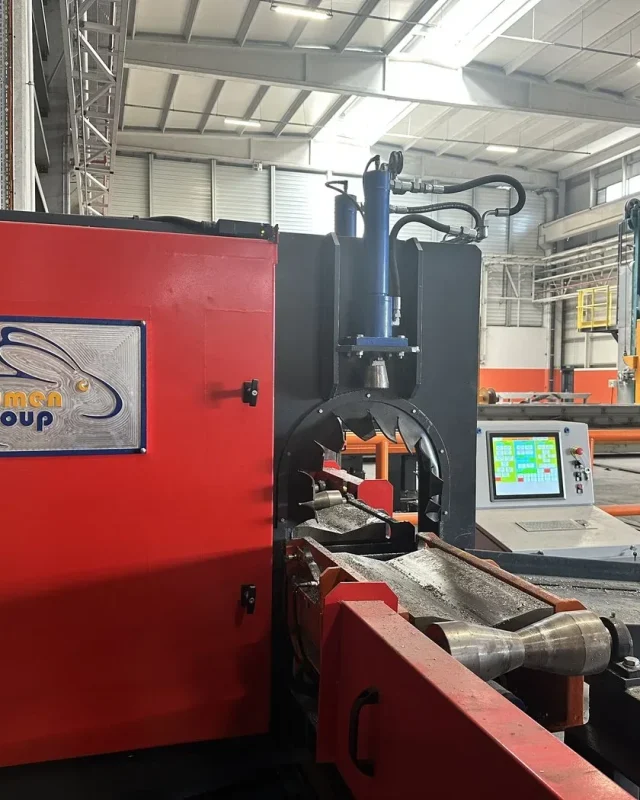
Automatic Billet Cutting
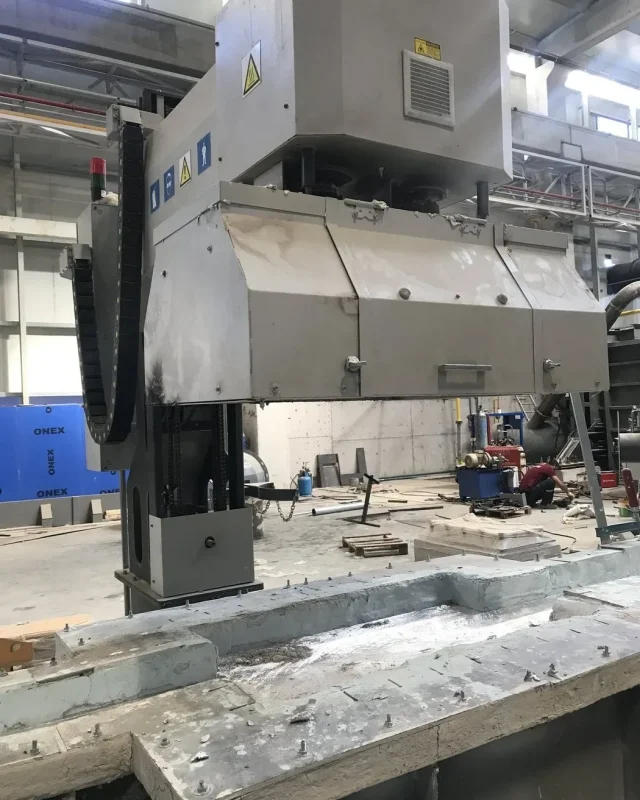
Post-casting automatic saw, length measurement and chip evacuation.
DISCOVERLet’s design your casting line together
What billet diameters do you cast, what is your alloy range, and how much room do you have on site for the pit? Everything else, from mould size to the water system, follows from these three answers.
Request a Quote