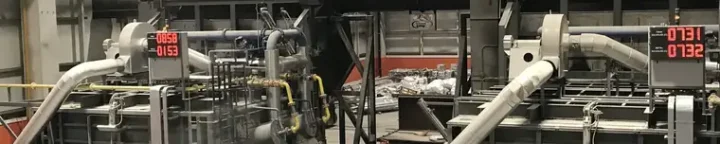
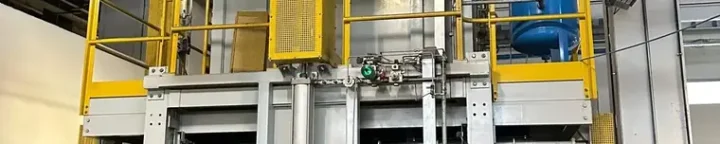
We automate loading, unloading and transfer movements
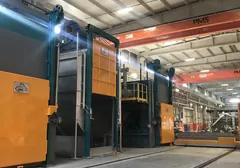
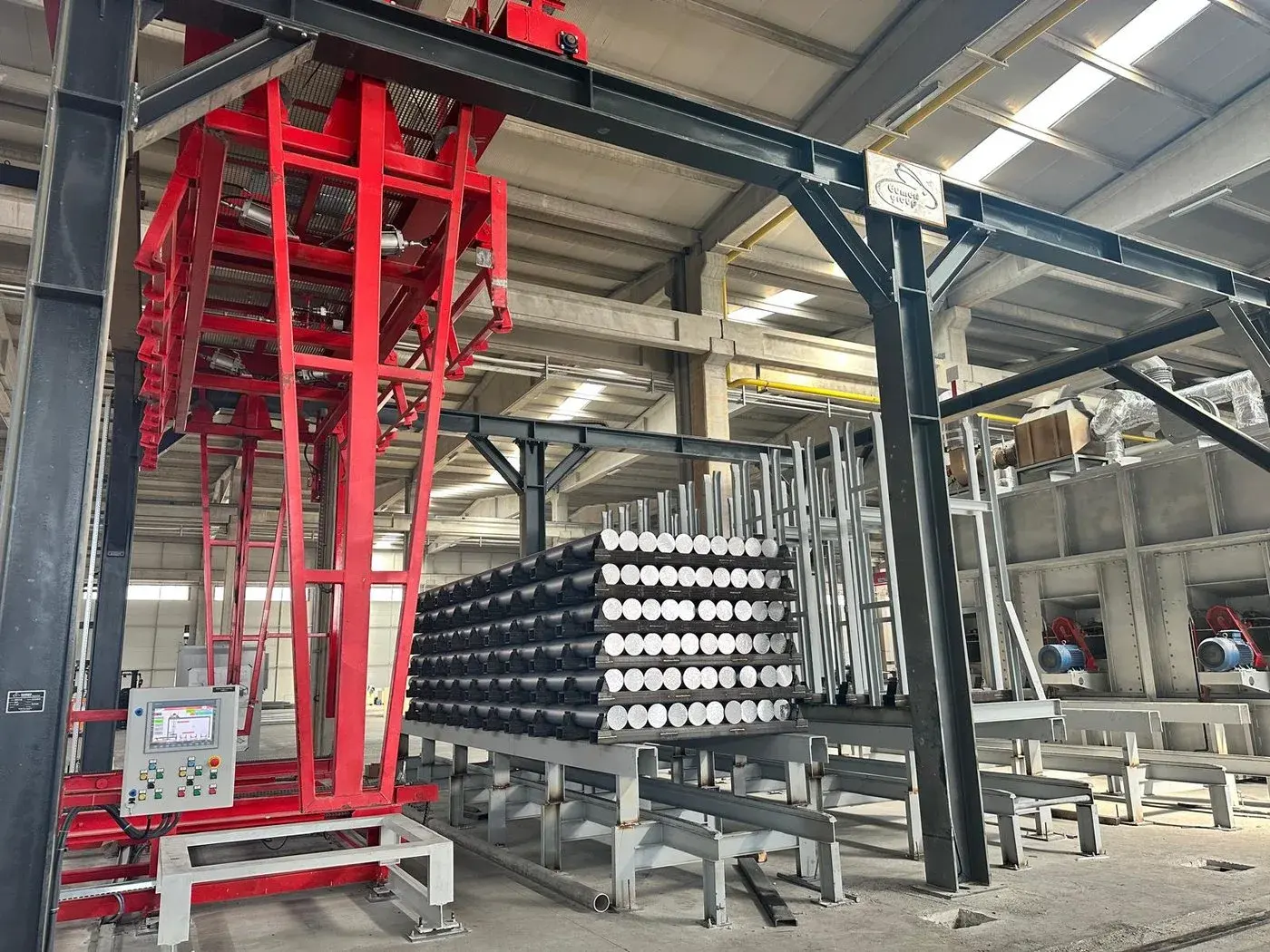
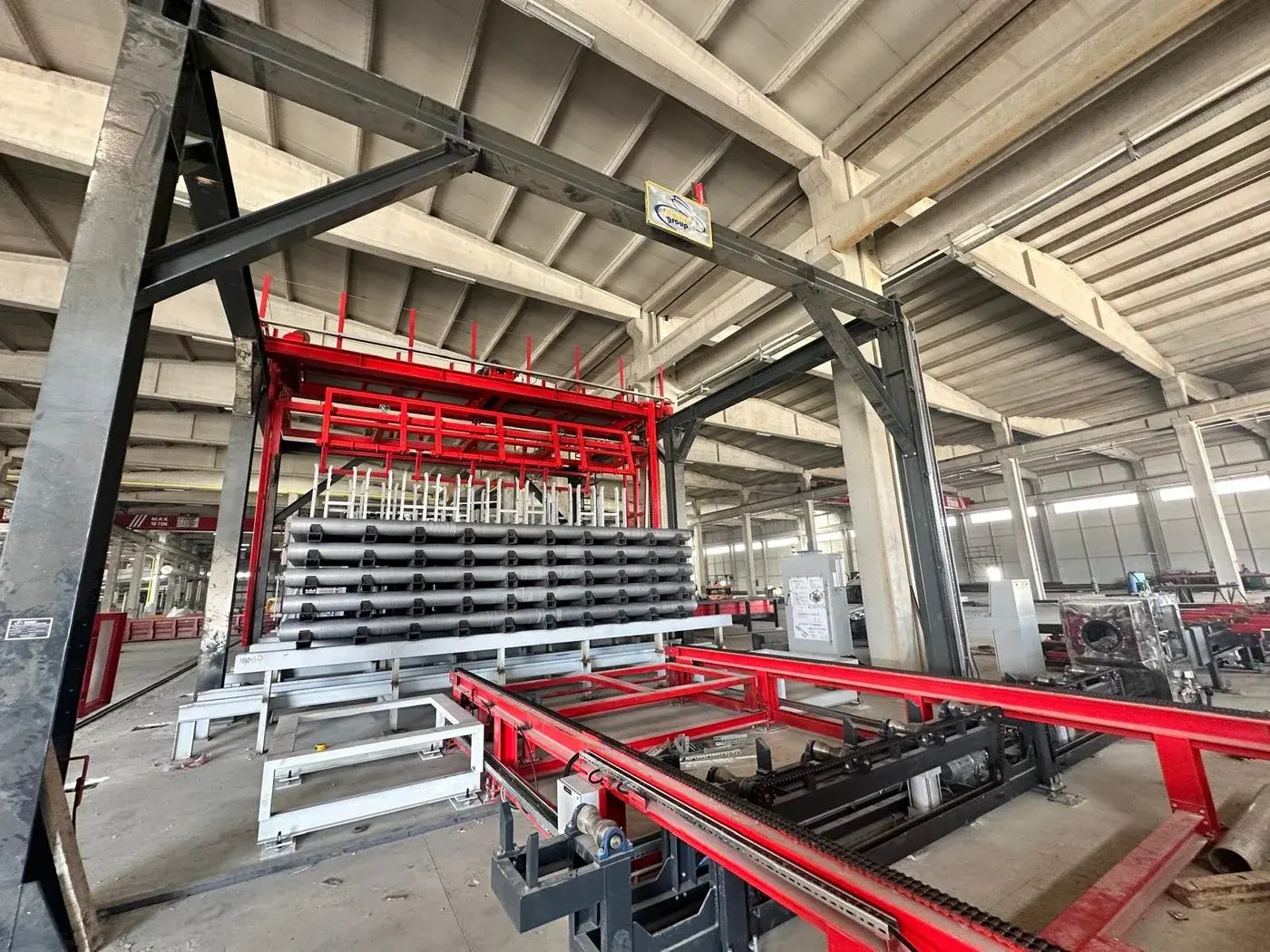
We make billet movement repeatable from the pit to the stack, from the stack to the furnace and from the furnace to the press, using stacking units, robot grippers, heat-resistant conveyors and transfer cars. We design the system for hot transfer up to 500 °C; thanks to the modular structure, it can be started at the line’s worst bottleneck and extended step by step.
- Billet diameter
- 75 – 300 mm
- Hot transfer
- Up to 500 °C
- Gripper
- Hydraulic / pneumatic
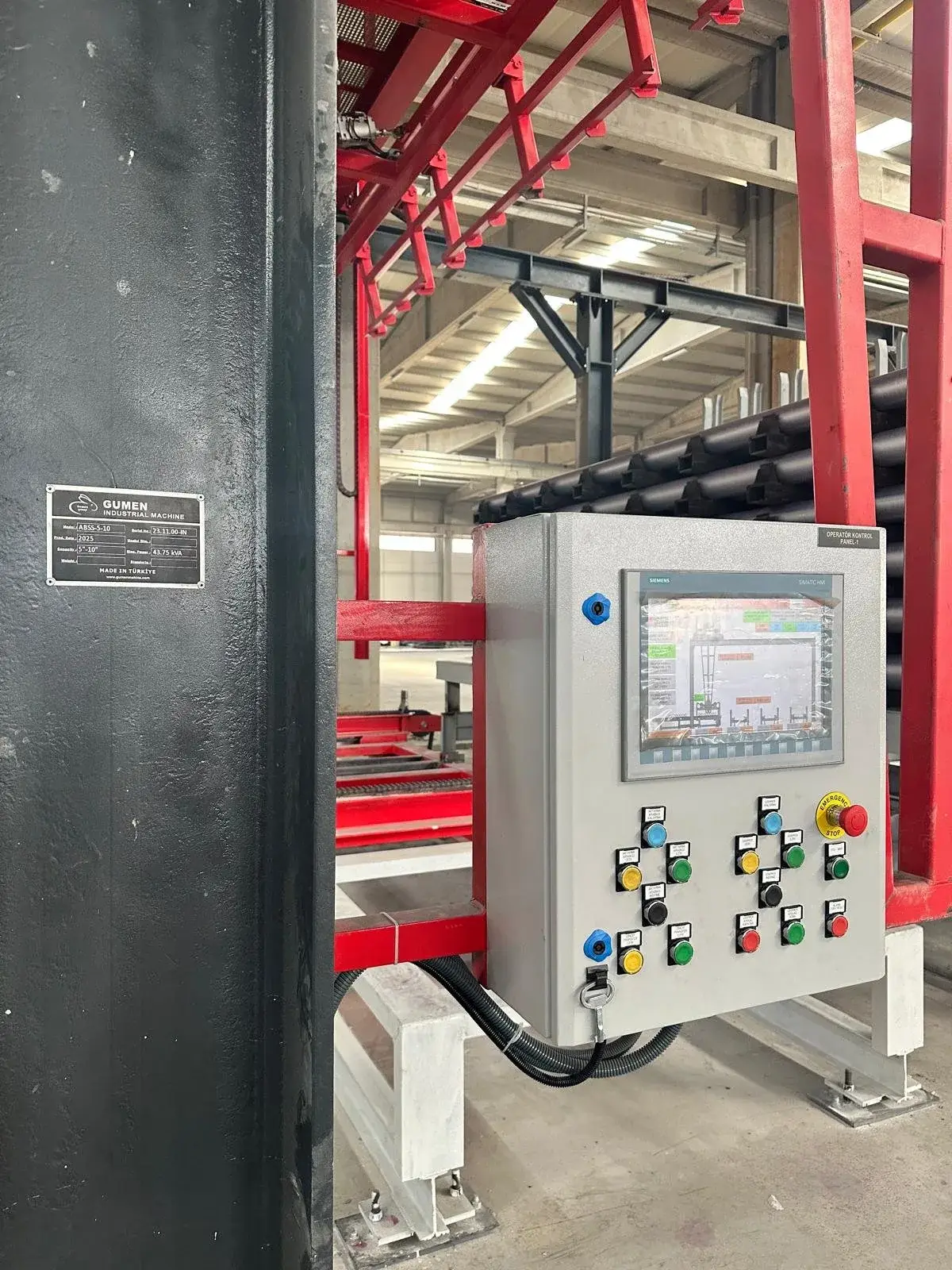
- Control
- PLC / SCADA
Technical specifications of loading and unloading systems
- Stacking capacity
- Project-specific — based on billet diameter and line speed
- Billet diameter
- 75 – 300 mm
- Gripper type
- Hydraulic or pneumatic jaws
- Robot integration
- Gripper adaptation to an industrial robot arm
- Temperature tolerance
- Hot part transfer up to 500 °C
- Conveyor
- Heat-resistant; from casting exit to testing and packaging
- Dross removal
- Mechanical skimming unit
- Control
- PLC / SCADA; shared with the furnace and casting automation
- Records
- Every step is recorded, so downtime and efficiency can be analysed
- Retrofit
- Can also be installed as an add-on to non-Gumen equipment
Where should automation start?
Automating the whole line at once is the most expensive and riskiest route. A more efficient approach is to pick the single point where cycle time varies the most and the safety risk is highest, and start there. In most plants this point is either hot billet transfer or dross removal from the furnace surface. Once one step is automated, a measurable gain follows, and the case for the next step makes itself.
We start automation where the line gets blocked
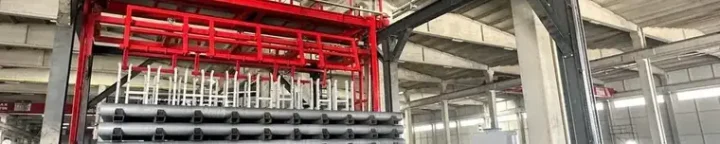
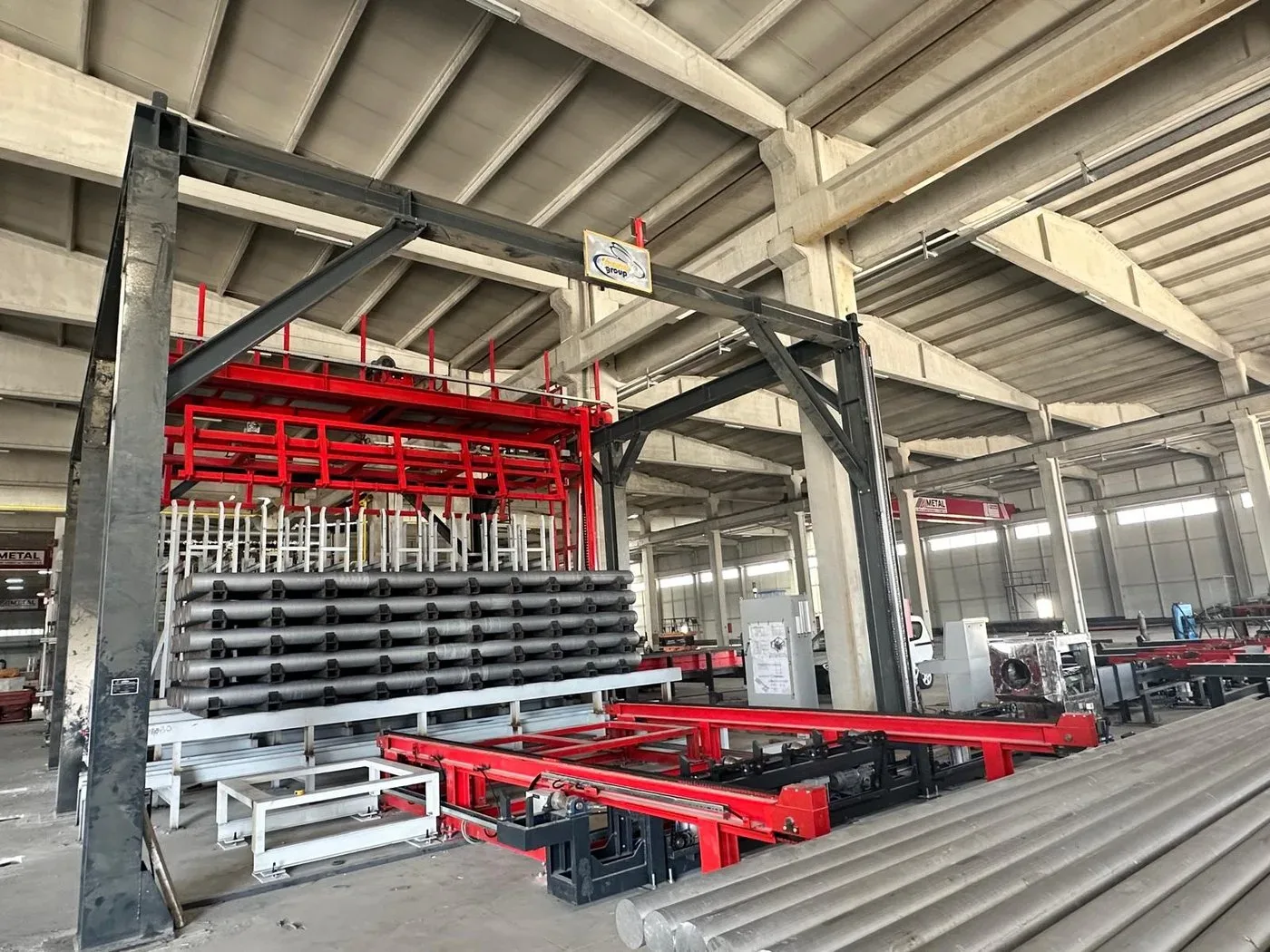
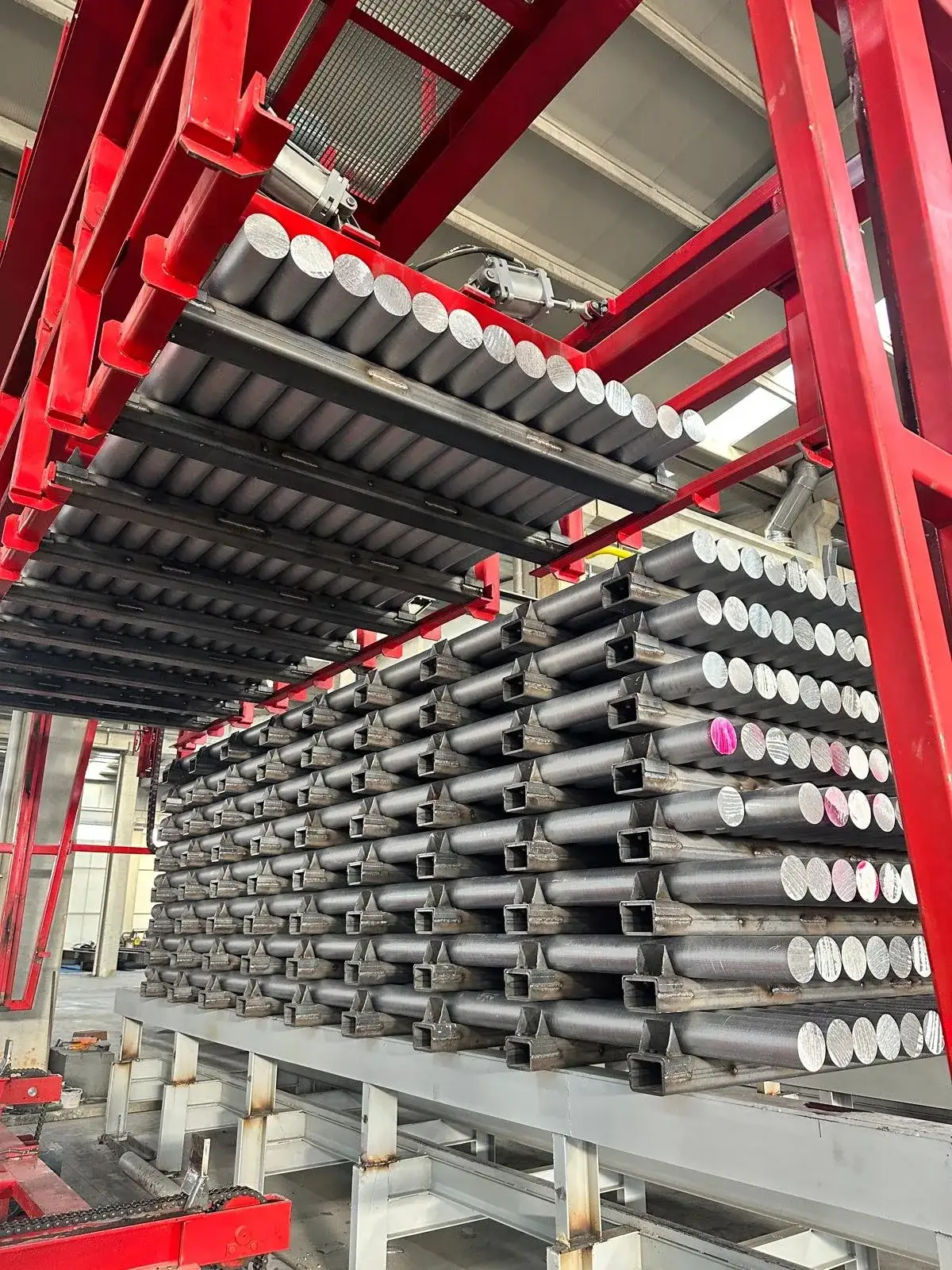
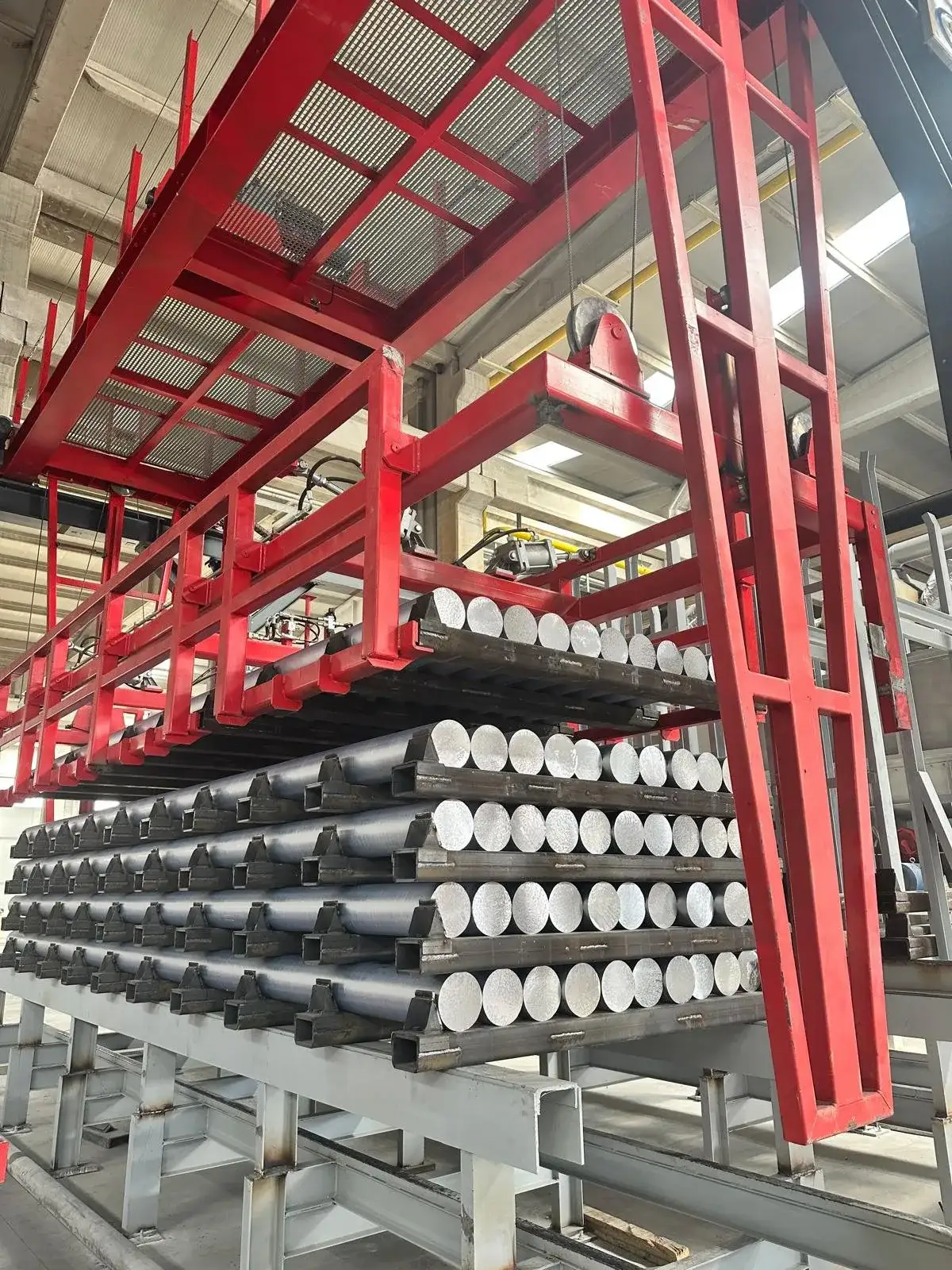
Billet Stacking Unit
Automatic stacking at the exit of the casting line. The stacking pattern is set up according to billet diameter and how the next step is fed.
Stack Feeding Unit
Automatic loading into the extrusion heating furnace. It works to the furnace’s cycle time.
Robot Gripper
Precise positioning of the hot billet. The jaw type and material are selected for the temperature being handled.
Heat-Resistant Conveyor
From casting exit to testing or packaging. Carries hot parts up to 500 °C.
Transfer Car
Movement between stations. The rail route is drawn to suit the existing layout.
Mechanical Skimming Unit
Dross removal from the furnace surface; details are on the Charging and Cleaning Systems page.
Four things set these systems apart
Cycle time is stabilised
The same movement takes the same time on every cycle. The capacity gap between shifts closes.
Operators leave the hazard zone
In hot metal transfer, dross removal and heavy billet handling, people no longer have to stand in the hazardous area.
The billet always lands at the same point
The robot gripper places the billet at the same point in the furnace and the press every time. Profile and die problems caused by incorrect positioning are reduced.
Can be installed step by step
Units are added to one another on the same control infrastructure; the investment can be split up as the line grows.
Explore the technical documents and catalogues
We answer frequently asked questions
about loading and unloading systems
Yes: we design the systems as add-ons, including for lines with no Gumen equipment. What matters is that the existing layout has enough space and that there is an interface on the control side that the system can be connected to.
Up to 500 °C. The gripper jaws and conveyor materials are selected for this temperature.
The robot arm comes from industrial robot brands; the gripper, the adaptation and the automation integration are ours. If the plant already has a robot, we can adapt the system to it as well.
We do not commit to a single figure; the range our customers have shared with us is 12–24 months. The result depends on the cycle time gained, the reduction in scrap loss and the labour savings. We work out the calculation together with your current cycle times.
Where in the line do these units work?
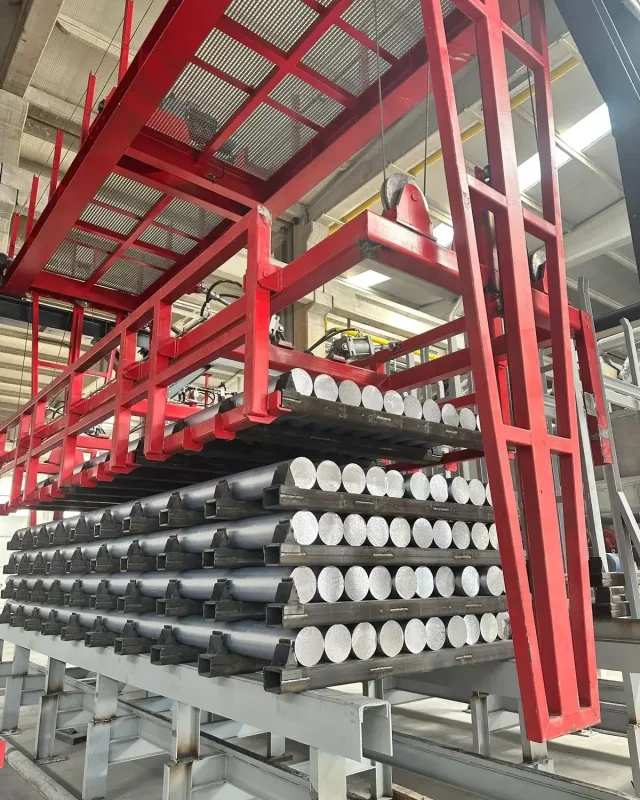
End-of-Line and Logistics
What changes at the end of the line once handling movements are standardised?
DISCOVER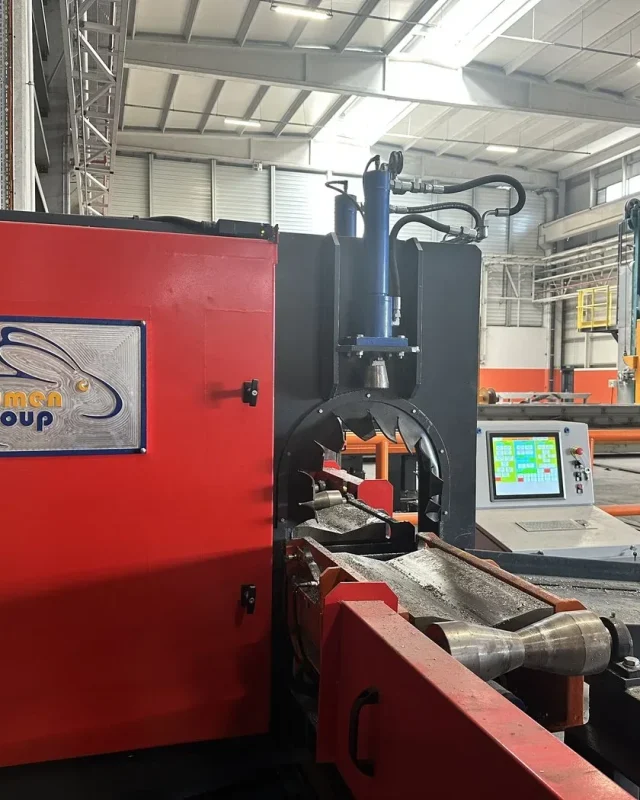
Automatic Billet Cutting
The step before stacking: cutting to length, weighing and separating out defective pieces.
DISCOVER
Charging & Cleaning Systems
Handling in the furnace room: charging car and mechanical dross skimming.
DISCOVER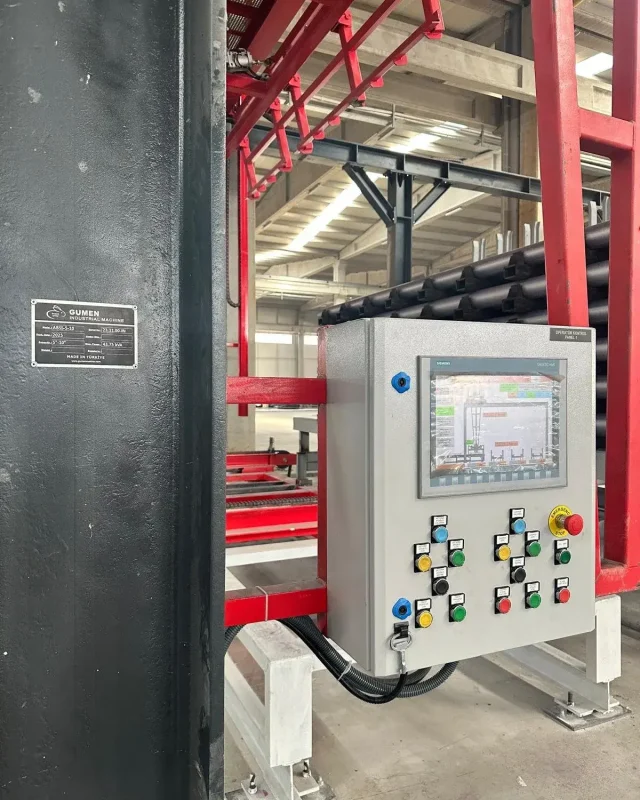
PLC & SCADA Systems
The control side that manages the movements and records every step.
DISCOVERLet’s find your line’s bottleneck
At which transfer does waiting occur, and in which job does the operator work closest to the heat? Share your current cycle times, and we will work out together where to start.
Request a Quote