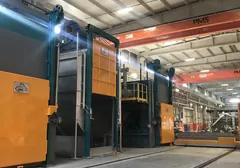
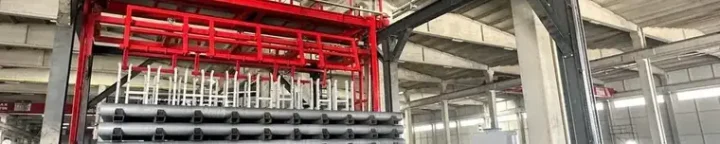
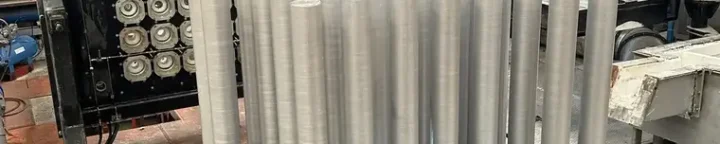
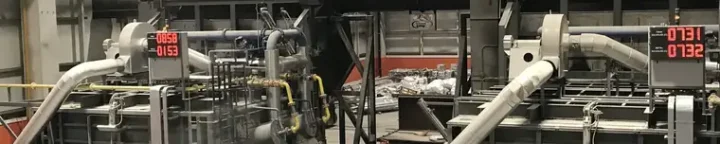
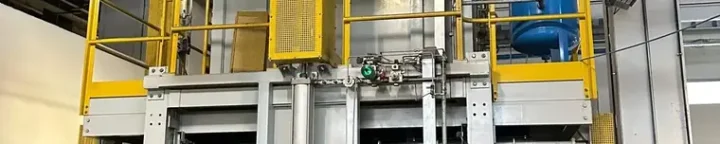
We automate the loading, unloading and transfer steps to match the rhythm of the line
We also retrofit conveyors, transfer cars, robot grippers and stacking units into existing lines. In the steps that move to automation, the cycle time does not vary from shift to shift, the operator leaves the hot zone, and the billet reaches the press in the same position every time.
- Billet diameter
- 75 – 300 mm
- Hot transfer
- Up to 500 °C
- Gripper
- Hydraulic / pneumatic
- Control
- PLC / SCADA
Why Gumen Makina Loading and Unloading Systems?
Uninterrupted operation
Automation removes shift dependency. Once the cycle time is fixed, the true capacity of the line can be measured for the first time.
Workplace safety
In hot metal transfer, dross skimming from the furnace surface and heavy billet handling, the operator steps out of the danger zone.
Product quality
The robot gripper places the billet in the furnace and the press in the same position every time. Positioning directly affects both profile quality and die life.
Full traceability
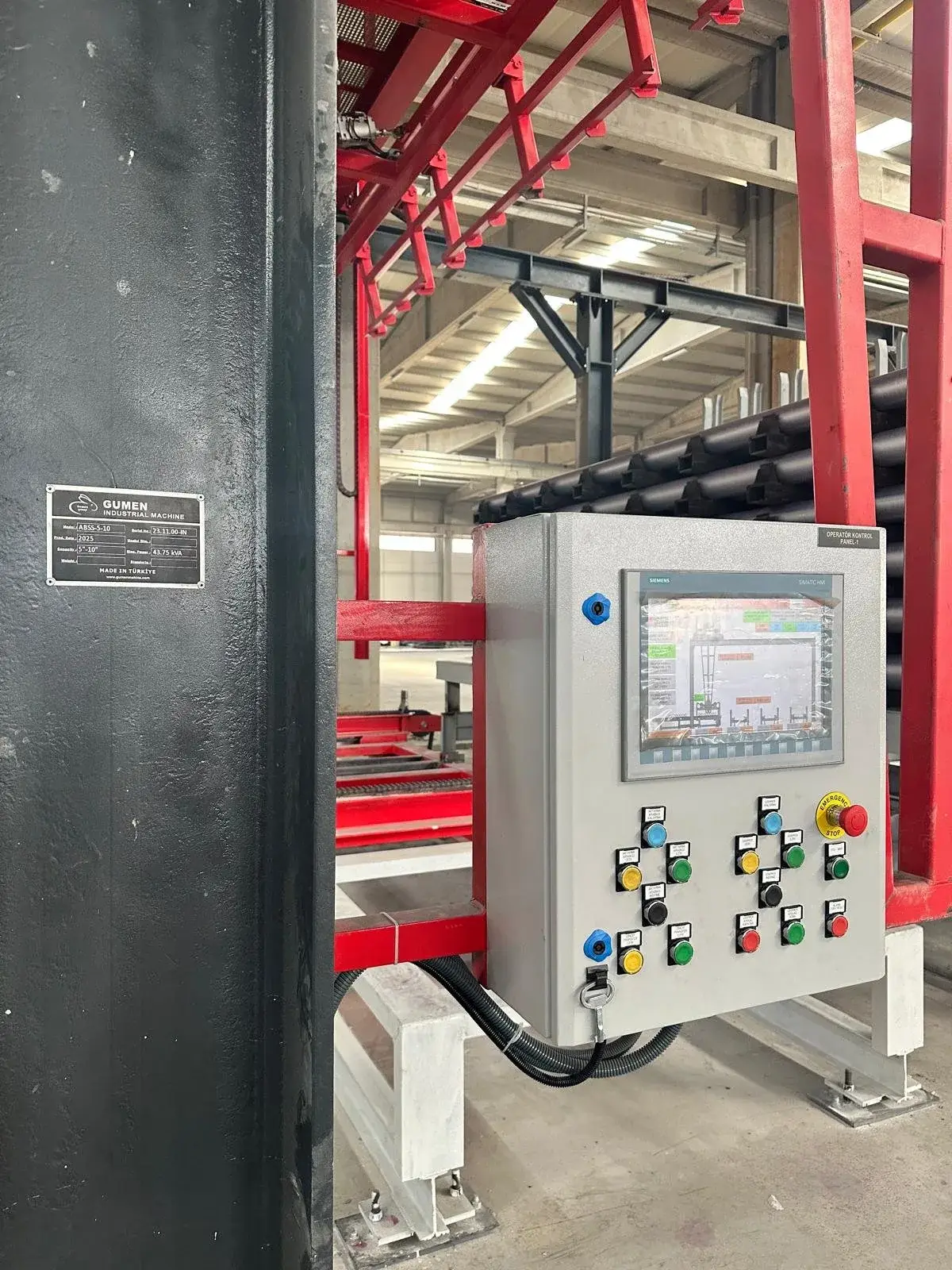
Every step is recorded via PLC/SCADA. Downtime analysis and efficiency tracking are based on records, not estimates.
Four components along the line
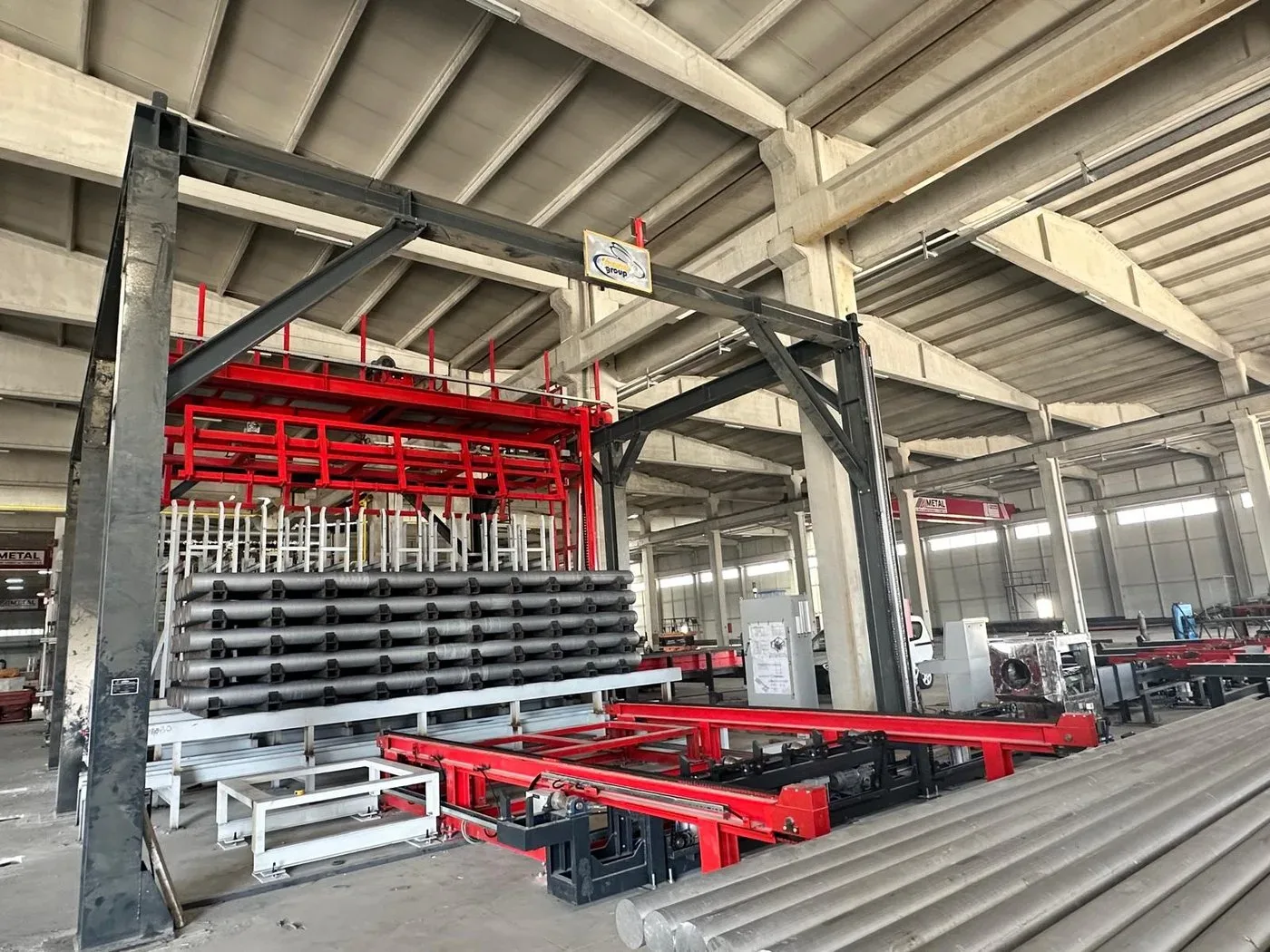
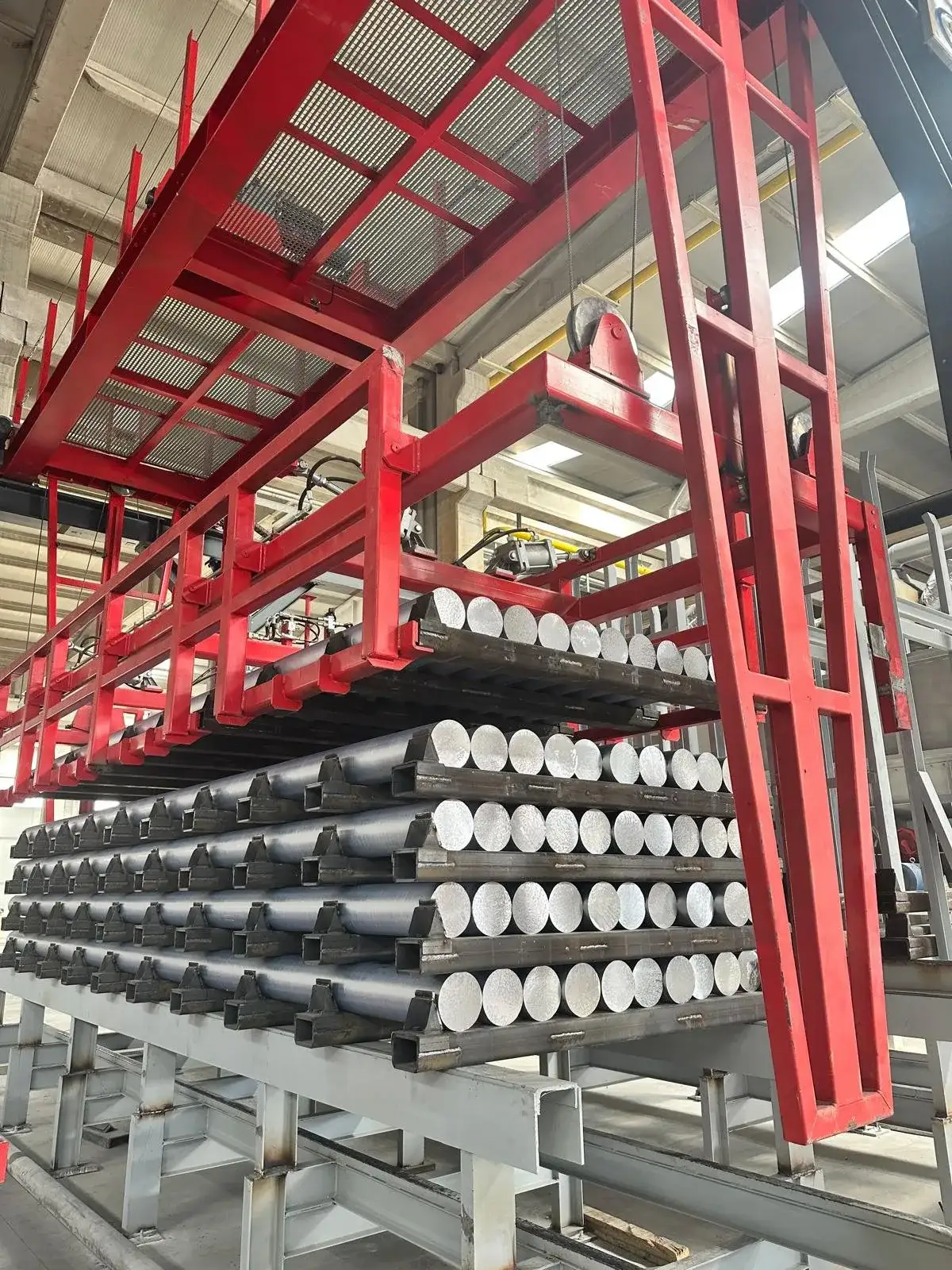
Billet Stacker / Destacker
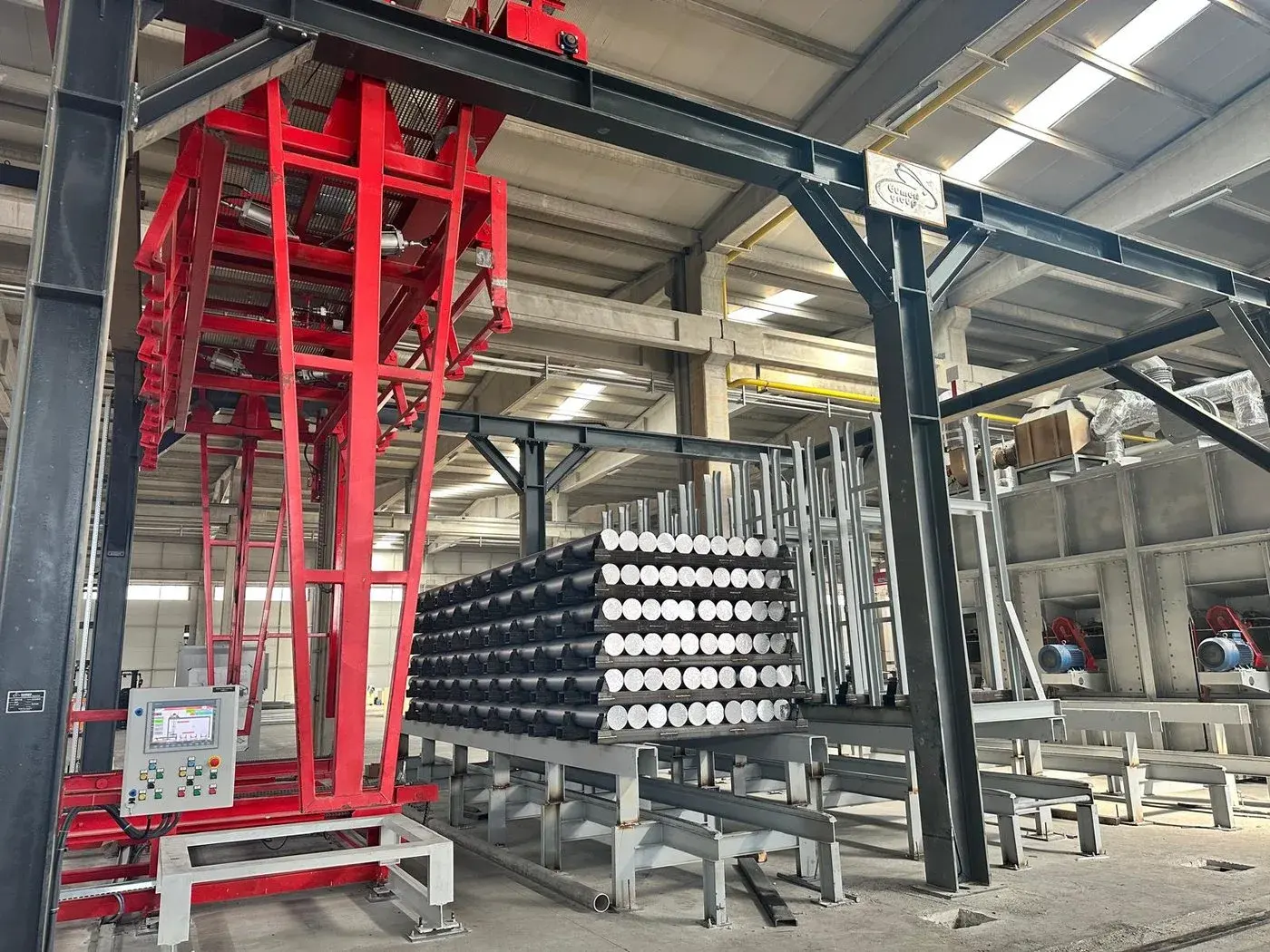
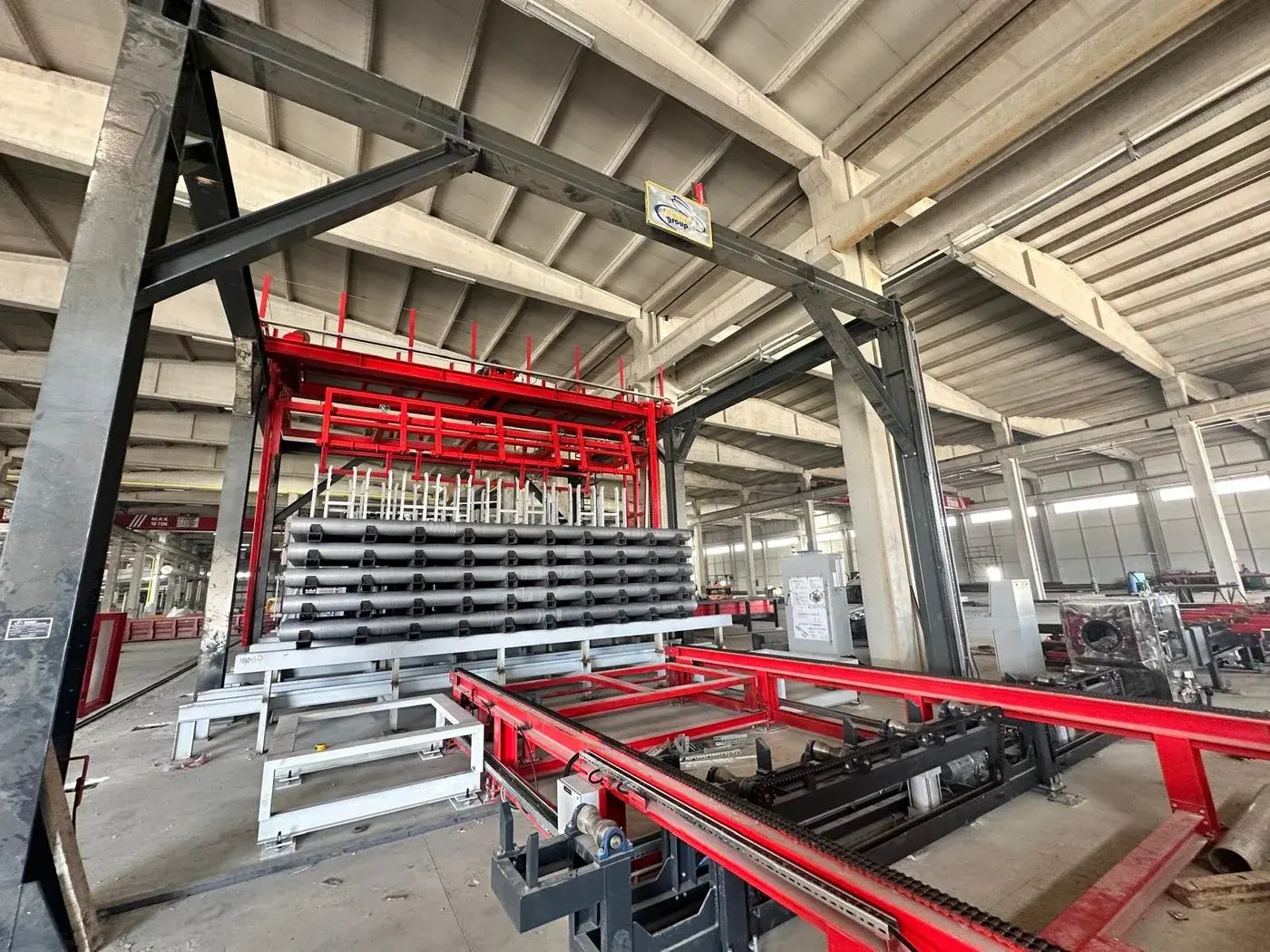
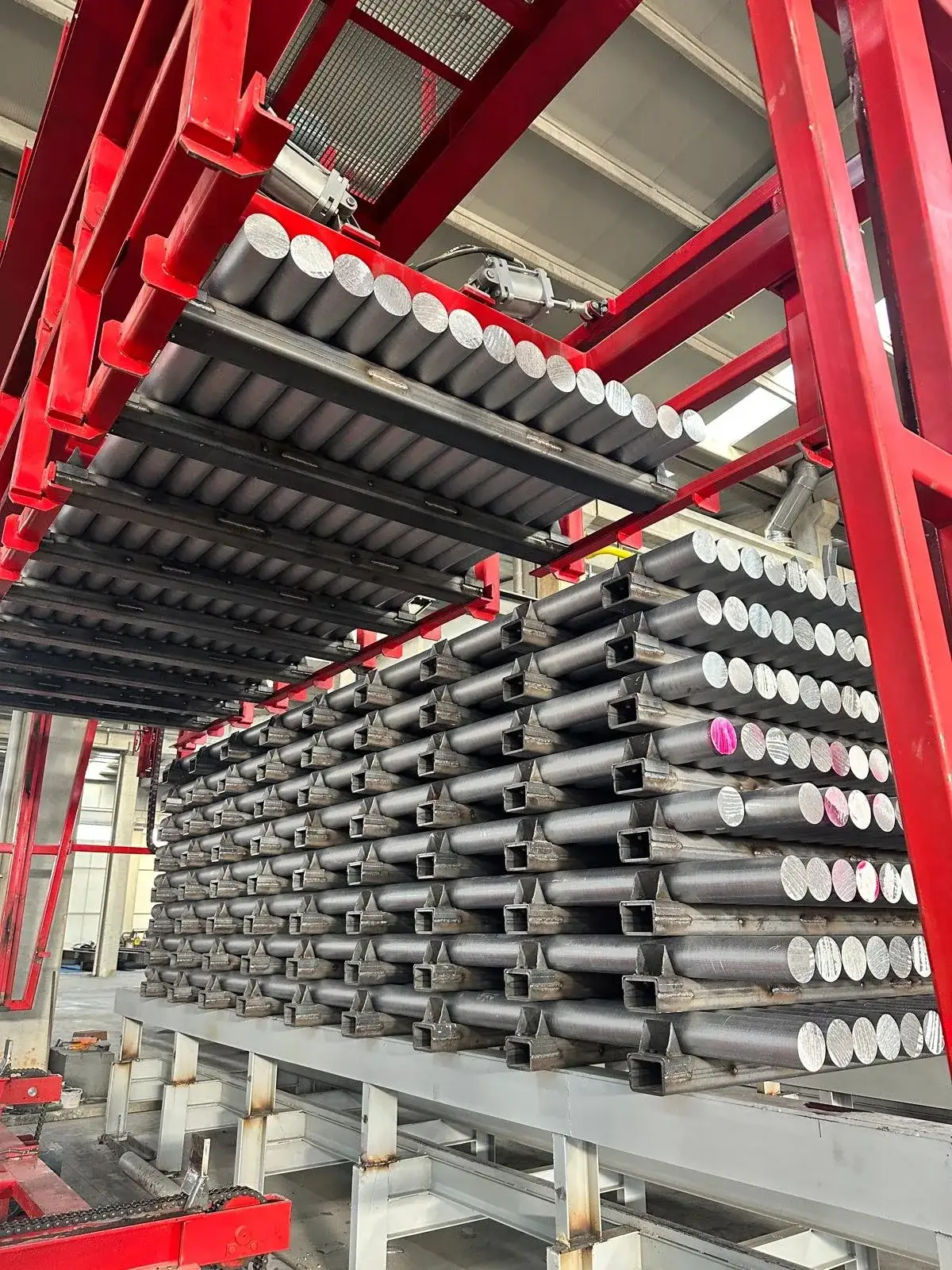
System structure: stacking head, lifting mechanism, row carrier and control panel. At the casting outlet it stacks the billets; on the extrusion side it feeds them to the furnace one by one.
- Automatic stacking at the casting outlet
- Single-billet feeding to the extrusion furnace
- Custom design for diameter and length
- Adjustable stack height
- Synchronised with the conveyor and transfer car
- Cycle time calculation by capacity
Robot Gripper
System structure: industrial robot arm, hydraulic or pneumatic gripper, heat shield and safety enclosure. The section that carries the hot billet with precise positioning.
- Hot transfer up to 500 °C
- Hydraulic or pneumatic gripper
- Industrial robot arm integration
- Repeatable positioning
- Constant cycle time
- Safety fence and interlocking
Skimming Machine
System structure: skimming arm, travel mechanism, dross collection hopper and control unit. It removes the dross from the surface of the melting and holding furnace without an operator having to stand at the furnace door.
- Automatic dross skimming from the furnace surface
- No operator waiting at the door
- Limiting metal loss
- Arm design to suit the furnace door size
- Dross collection and discharge
- Works together with the furnace automation
Conveyor and Transfer Line
System structure: roller or chain conveyor, transfer car, rail line and position sensors. The backbone that carries material from the casting outlet to testing, and from testing to packing.
- Roller and chain conveyor options
- Rail-mounted transfer car
- Feeding to the ultrasonic test station
- Transfer to the weighing and packing unit
- Tracking with position sensors
- Route to suit the plant layout
Technical documents and catalogues
We answer frequently asked questions
about line automation
Generally yes; most automation jobs are, in fact, additions to a line that is already running. What decides it is the level and layout of the existing equipment, and whether the control side is open to communication. For third-party equipment, we carry out a site survey first.
We do not commit to a single figure; the range our customers have shared themselves is 12–24 months. The result varies with your number of shifts, your current downtime and the number of steps moved to automation. We do the calculation at the quotation stage, using your own cycle times.
The precision required decides it. If the billet has to be placed in a specific position at the press or furnace, a robot gripper pays off; if it is enough to move it from A to B, a conveyor and transfer car are both more economical and simpler to maintain. On most lines the two work together.
Yes, in two ways: removing the dross in the same way every time reduces the molten metal that leaves with the dross; when done by hand, that amount varies with the operator and the time. The second gain is that the door stays open for a short time, which helps with both heat loss and operator safety.
The automation steps are brought together on the same PLC/SCADA infrastructure as the furnace and casting system; no separate control island is left. If your existing system is a different make, we settle the communication protocol at the start of the project.
We manufacture the equipment that makes up this solution in our own plant
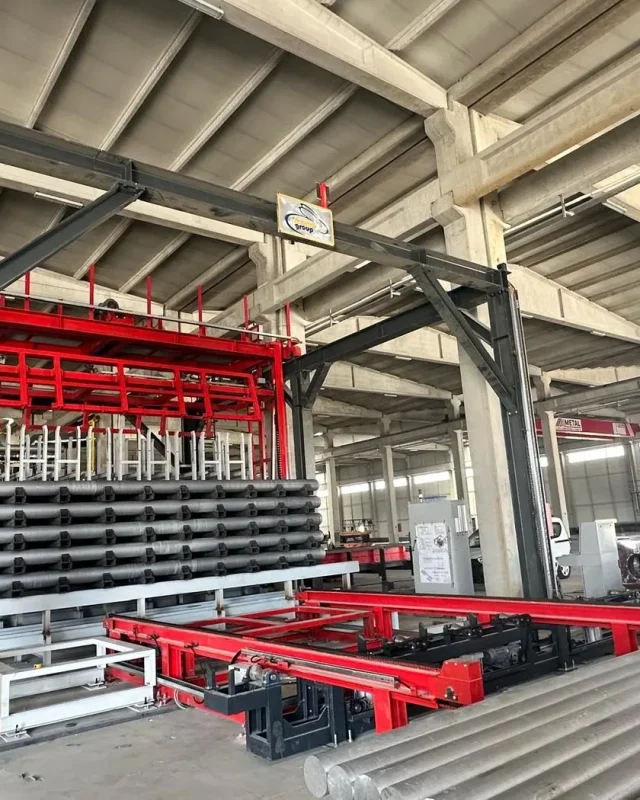
Automatic Loading & Unloading
Unmanned handling with conveyor, transfer car and robot gripper.
DISCOVER
Charging & Cleaning Systems
Automatic charging machine, bucket and dross skimming unit for the furnace surface.
DISCOVER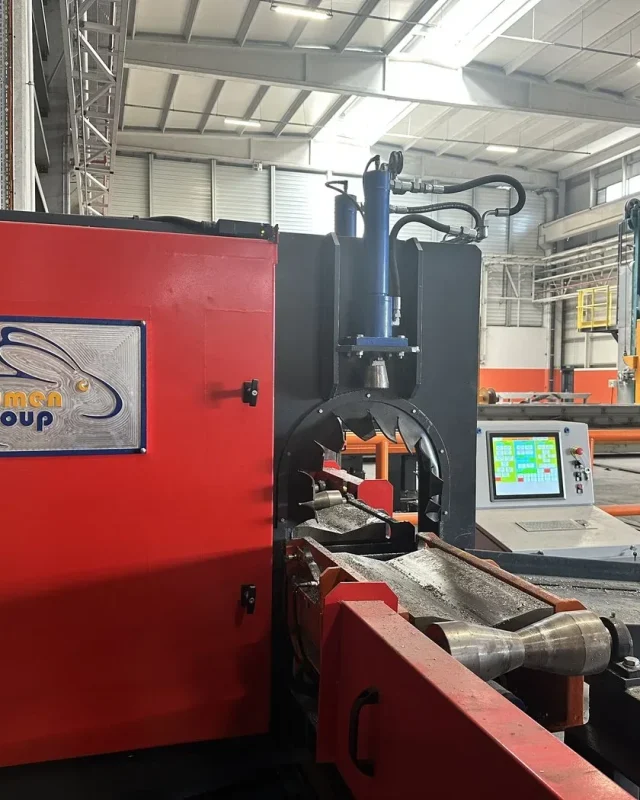
Automatic Billet Cutting
Automatic saw, length measurement and discharge synchronised with the conveyor.
DISCOVER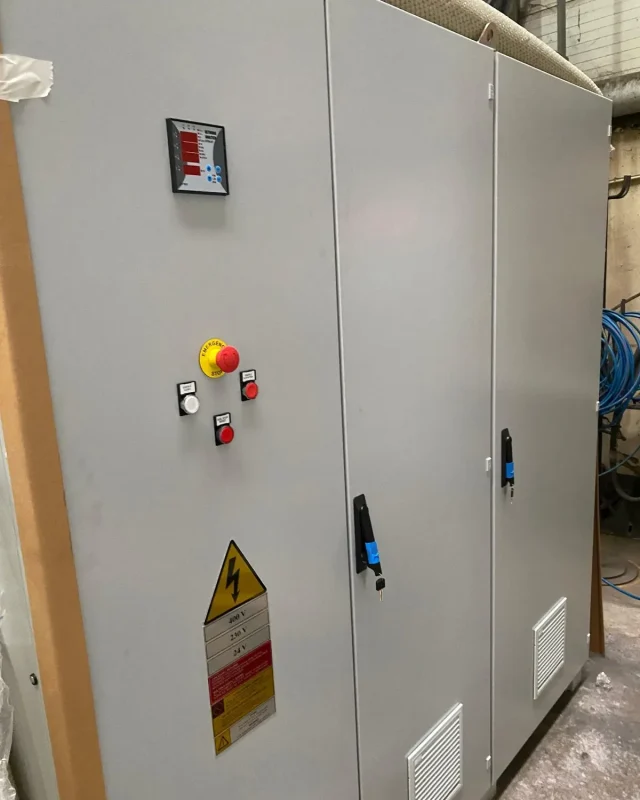
PLC & SCADA Systems
Cycle time, downtime record and efficiency report on a single screen.
DISCOVERLet’s plan the automation of your line together
How many operators work at each step, how much does your cycle time vary from shift to shift, and how much space do you have on site? Where automation should start often lies in these three answers.
Request a Quote