
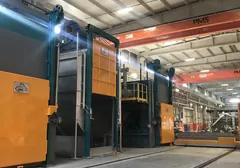


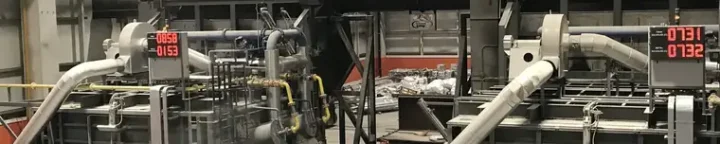


We build the homogenising furnace together with its cooling unit
We design the homogenisation cycle that evens out the internal structure of the billet after casting as a single recipe, including heating and forced cooling. We size the furnaces, batch-type or continuous, to your alloy list and daily tonnage; temperature distribution and cycle time are monitored through the PLC.
- Uniformity
- ±5 °C
- Cooling
- Forced air
- Configuration
- Batch / continuous
- Records
- Profile per load
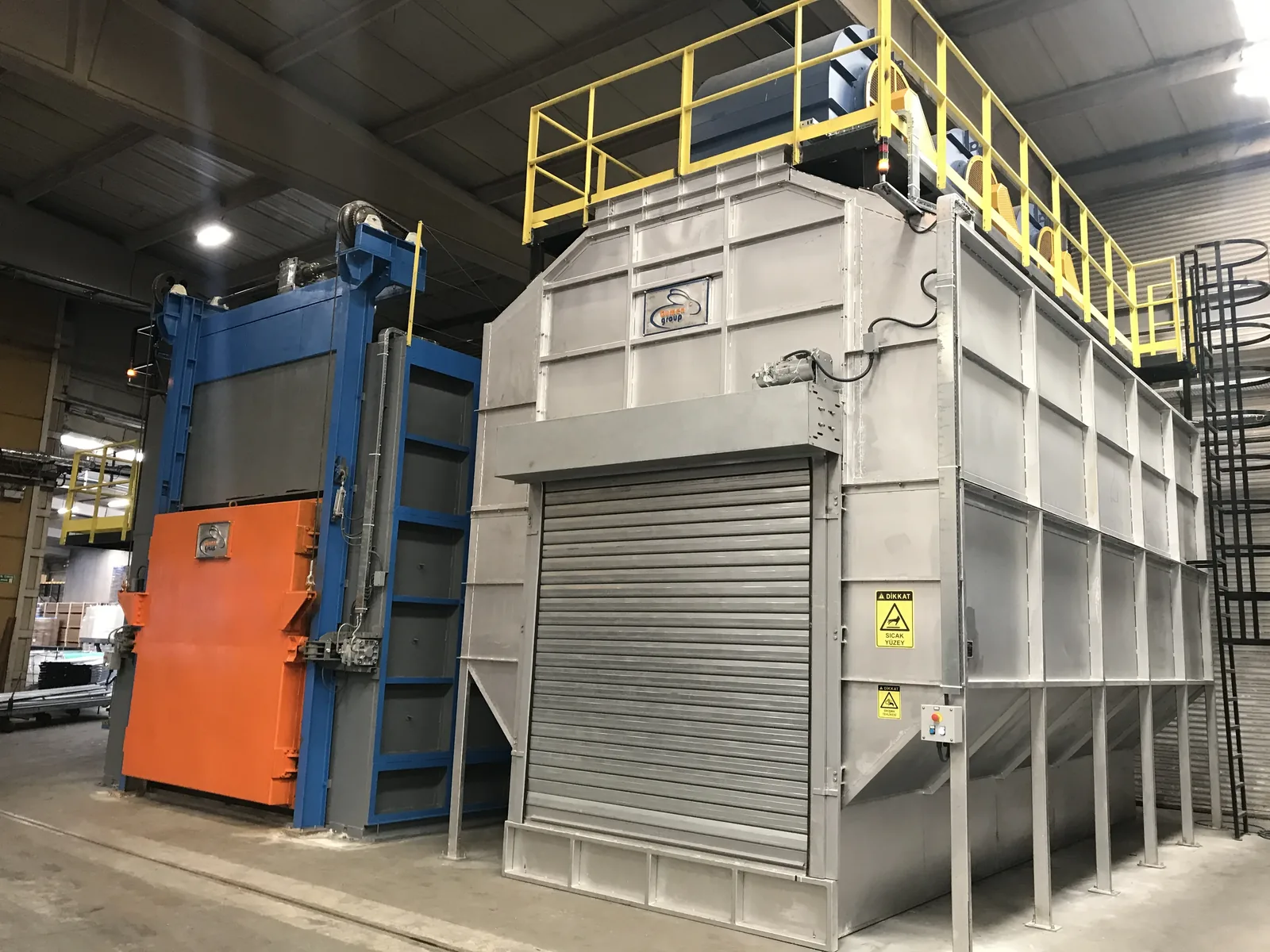
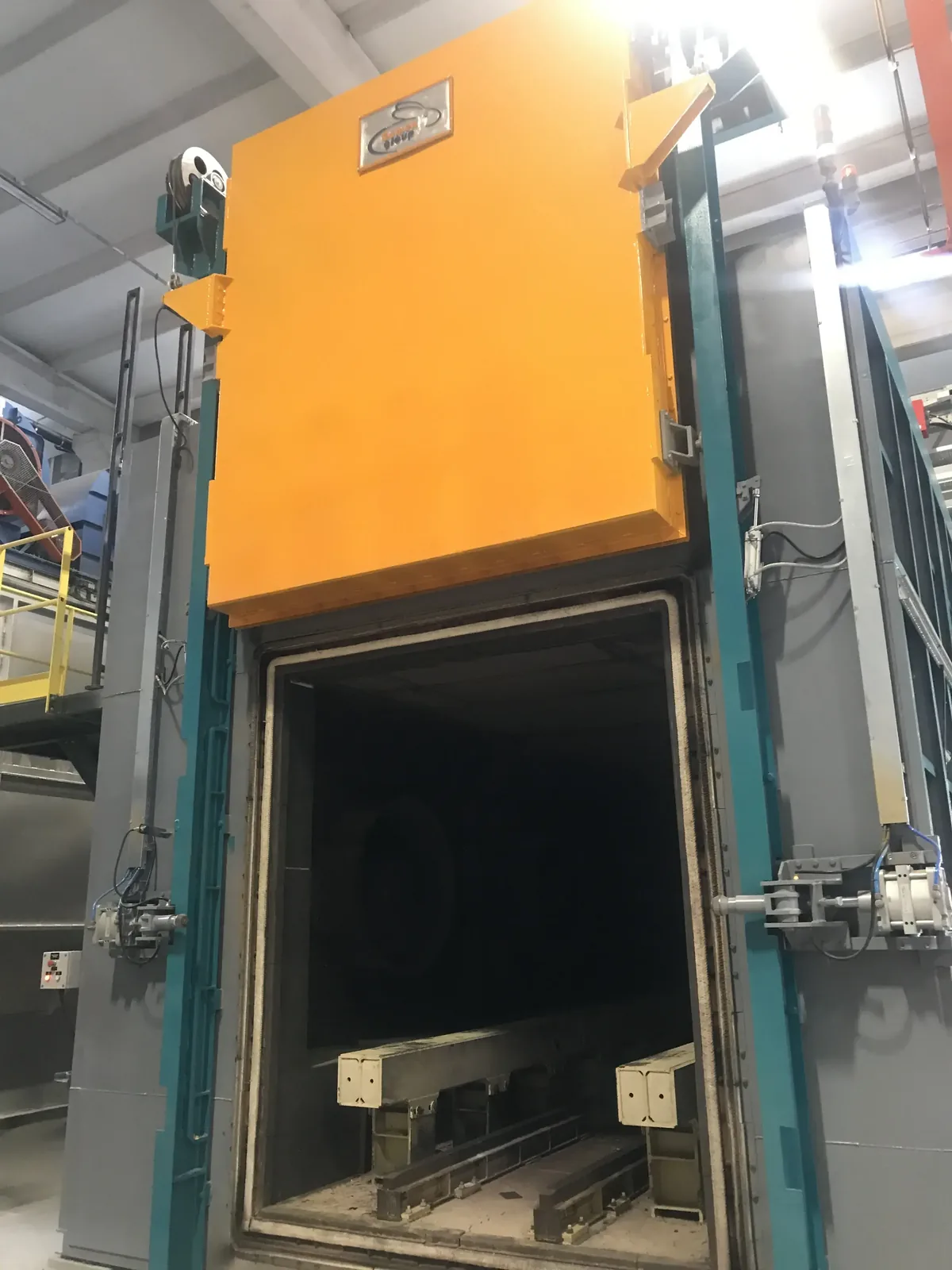
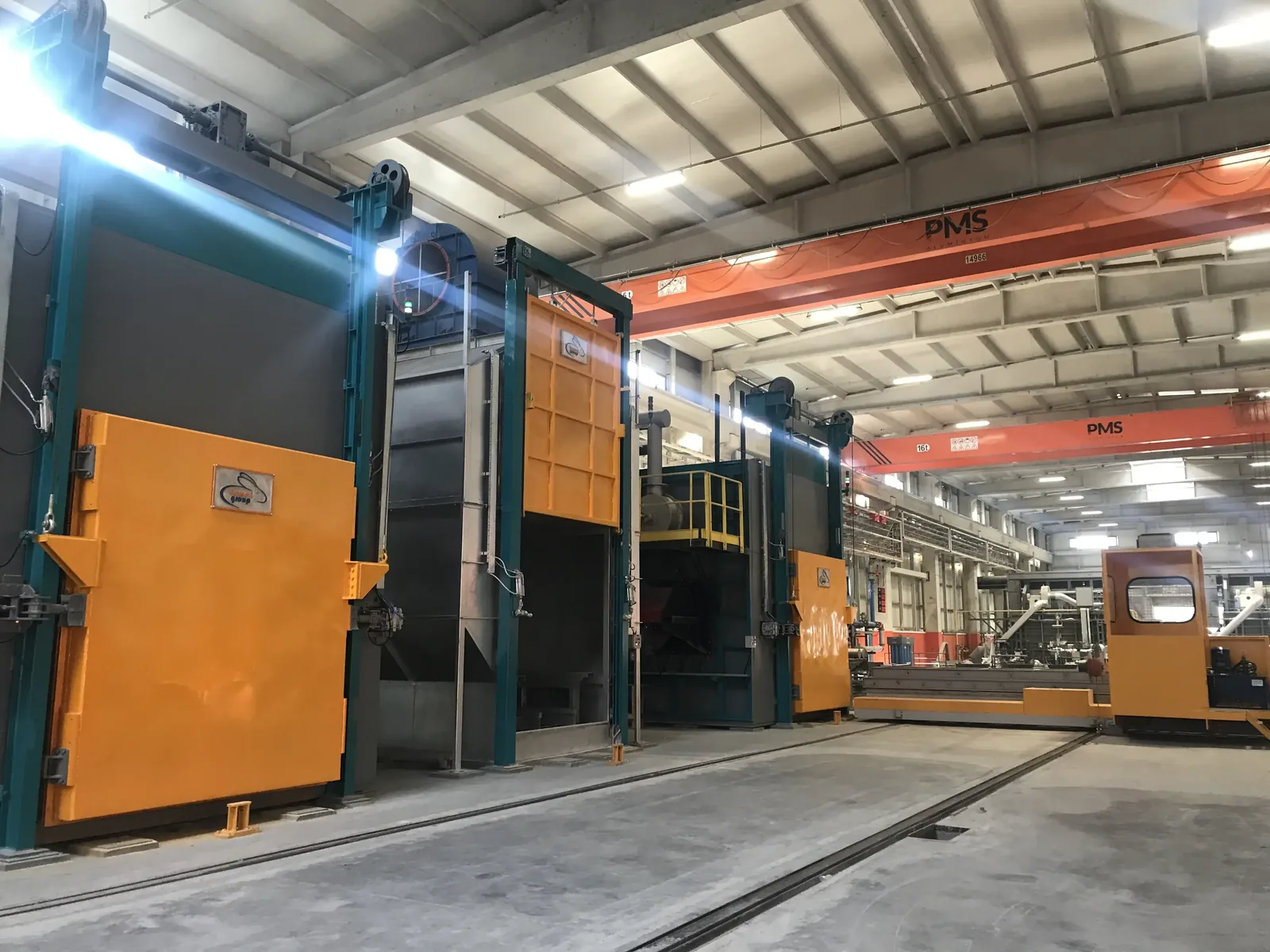
Homogenising furnace technical specifications
- Furnace type
- Batch-type or continuous
- Temperature uniformity
- ±5 °C across the furnace volume
- Heating
- Gas-fired; air circulation with circulation fans
- Cooling unit
- Forced air or water-air — integrated with the furnace
- Cooling rate
- Programmed by recipe according to the alloy
- Billet diameter
- 75 – 300 mm
- Load charging
- Charging car or conveyor feed
- Control
- PLC: alloy-based heating and cooling recipes
- Records
- A temperature-time profile is archived for each load
- Alloy compatibility
- 1xxx – 7xxx series
- Position in line
- Between the casting pit and the extrusion heating furnace
Cooling matters as much as heating
If the billet cools slowly after homogenisation, dissolved elements precipitate again and most of the treatment is wasted. If it is cooled too fast, there is instead a risk of stress and cracking in the billet. The right cooling rate varies with the alloy and lies in a narrow range. The forced cooling unit exists to hit this range; because the furnace and the cooling run on the same PLC, the cooling recipe is recorded together with the heating recipe. A profile set once for an alloy is repeated in the same way in subsequent loads.
We build the furnace to suit your alloy mix and tonnage
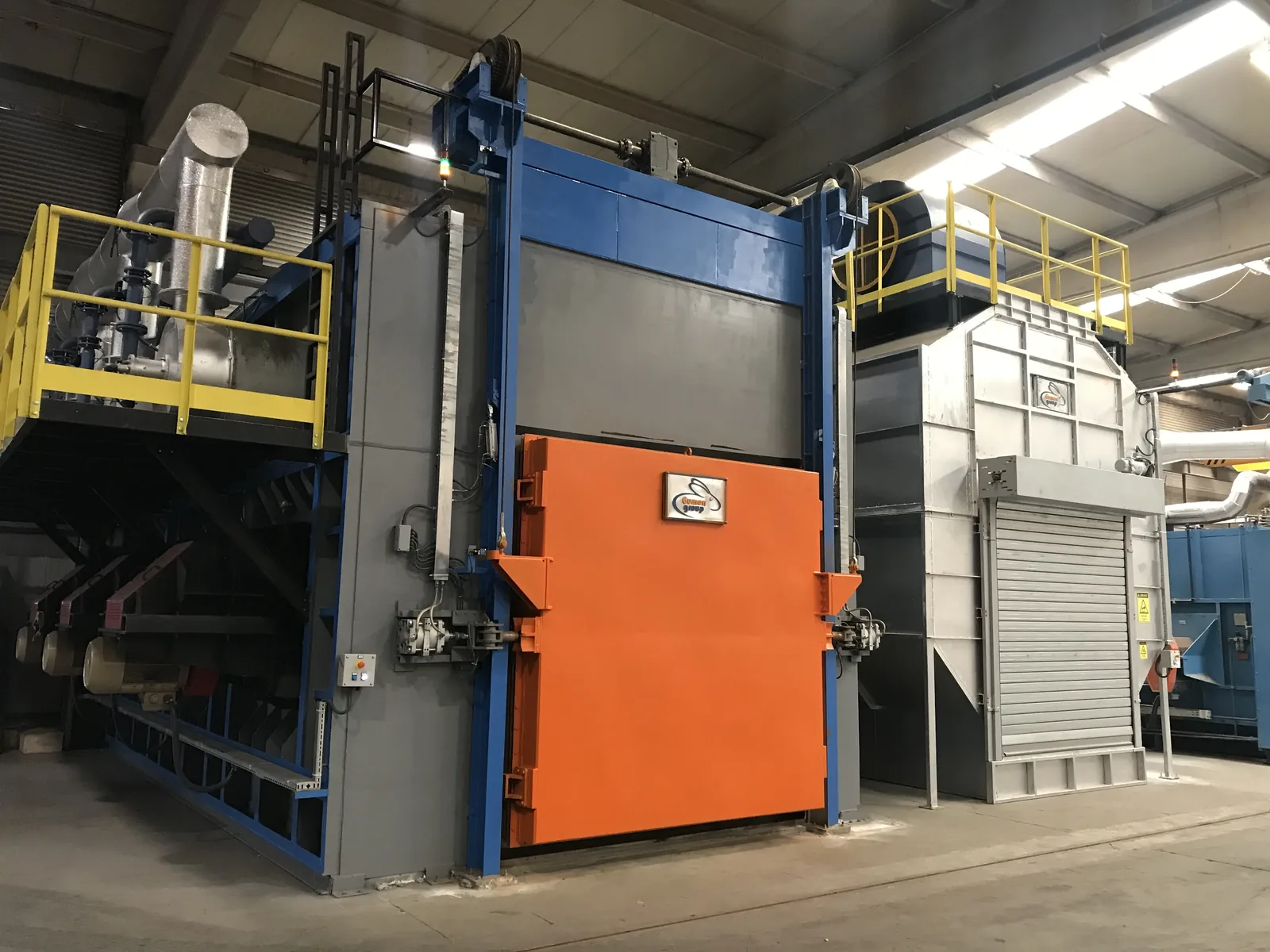
Batch-Type Homogenising Furnace
For plants with medium capacity and a wide variety of alloys. The recipe can be changed with every load, so flexibility is high.
Continuous Homogenisation Line
For high tonnage in a single alloy or a small number of alloys. The billet advances along the line; energy and labour fall compared with a batch arrangement.
Forced Air Cooling
Standard configuration. It delivers the required cooling rate in most 6xxx series applications.
Water-Air Cooling
For alloys that need a higher cooling rate and for large-diameter billets. It is managed by recipe through the same PLC.
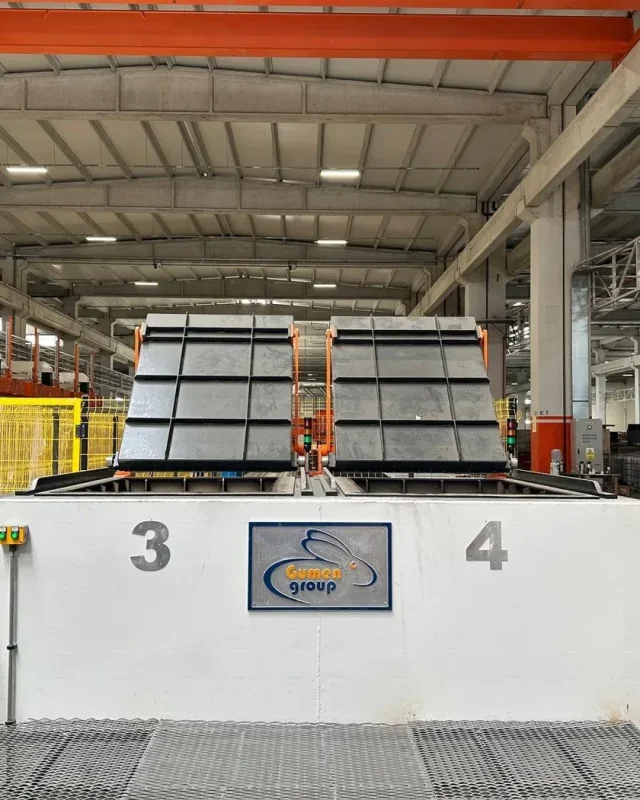
Charging Car and Feeding Assembly
Automation of loading and unloading. The stacking pattern is set up to suit the furnace volume, and the time the door stays open is shortened.
Four things set this furnace apart
±5 °C across the furnace volume
Thanks to fan-circulated air and multi-zone control, the billet in the middle of the stack heats up as much as the one at the edge.
The cooling unit comes with the furnace
Forced cooling is delivered as an integrated unit that runs on the same PLC and the same recipe as the furnace.
Each alloy is processed with its own recipe
The heating and cooling profile for each alloy is set once and then recalled at the press of a button. Operator-dependent variation disappears.
Every load is recorded
The temperature-time curve is stored per load. It can be looked back at in a customer audit or a scrap-loss investigation.
Explore the technical documents and catalogues
We answer frequently asked questions
about the homogenising furnace
Alloy variety decides. If high tonnage runs in a small number of alloys, a continuous line comes out ahead on energy and labour; if alloy and diameter change often, a batch-type furnace gives flexibility, as you can change the recipe with every load.
It varies with the alloy and billet diameter; heating, soaking and cooling are calculated together. If you share your alloy list and diameter range, we work out the cycle time and capacity accordingly.
Forced air is sufficient in most 6xxx series applications. Water-air comes into play for alloys that require a higher cooling rate and for large-diameter billets.
Yes, if there is space at the furnace exit and the control side can be connected. In plants that cool in the open air, this is one of the improvements that gives the fastest results: the cooling rate becomes part of the recipe.
Which line is this furnace part of, and what runs before and after it?
Billet & Die Heating
The next stop for the homogenised billet: the heating furnace that brings it to the temperature the press requires.
DISCOVER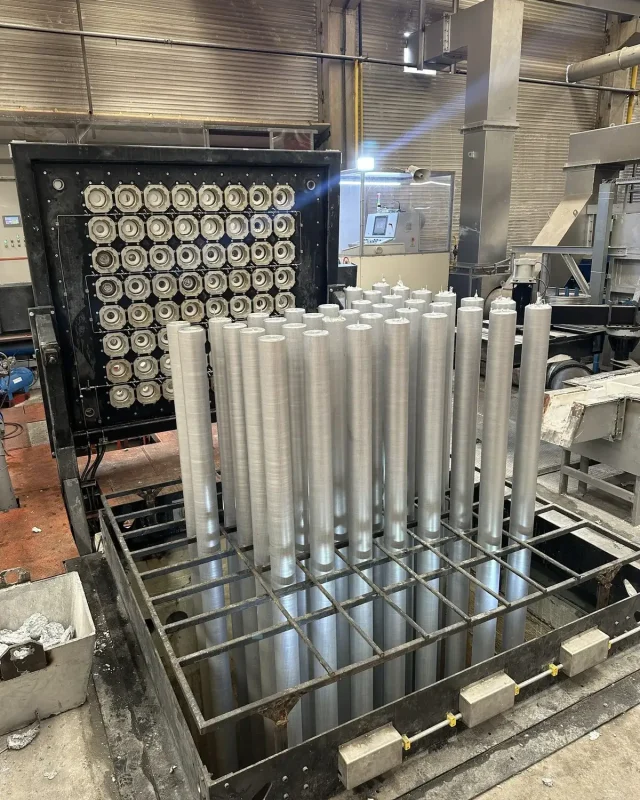
Billet Casting Line
Where the billet entering homogenisation comes from: the pit, mould table and water control.
DISCOVER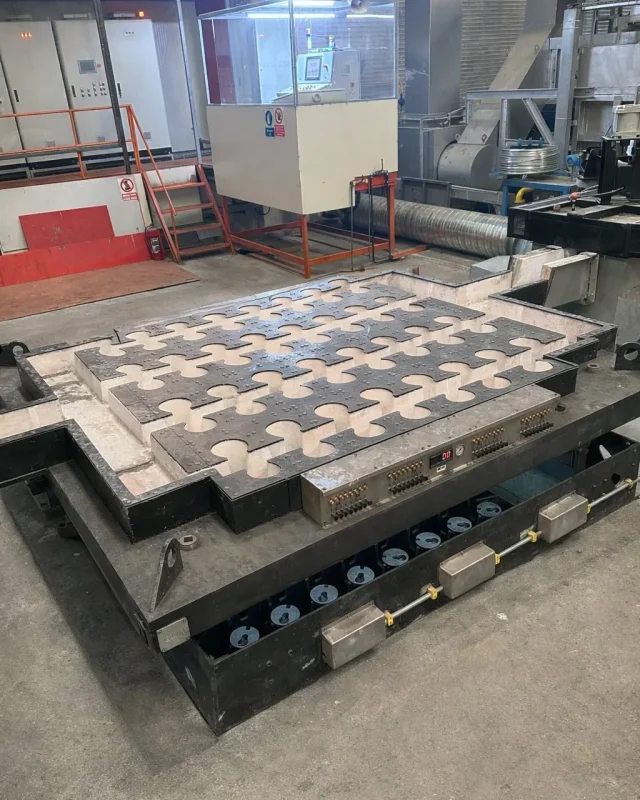
Casthouse and Billet Production
What equipment makes up the complete line in plants that cast and produce billets?
DISCOVER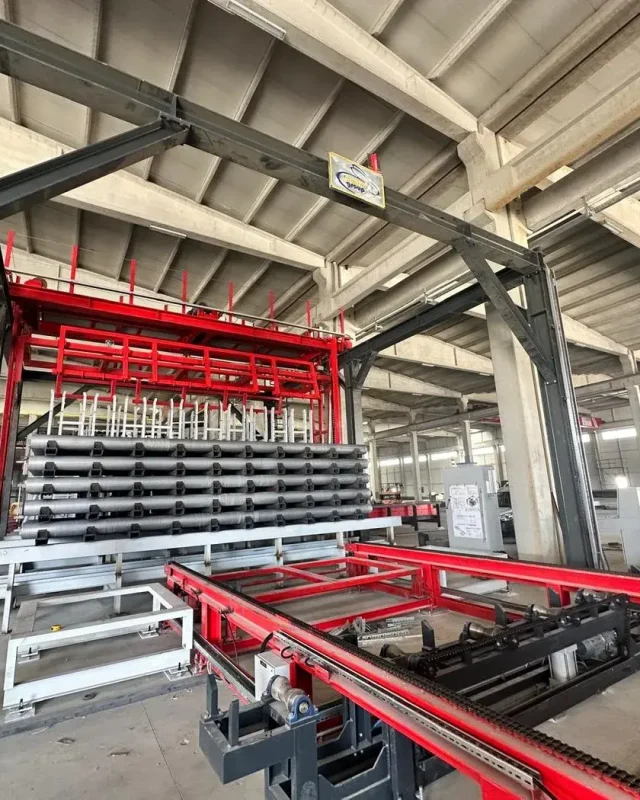
Automatic Loading & Unloading
Stacking and unloading at the furnace run without operators: conveyor, car, gripper.
DISCOVERShare your alloy list and we will calculate the cycle
Which alloys and which diameters do you homogenise, and what is the daily tonnage? With this information, we decide together whether it will be batch-type or continuous, and the type of cooling.
Request a Quote